KOREA ESSENTIALS · WHERE TO STAY IN SEOUL
Where to Stay in Seoul: Hongdae, Myeongdong or Gangnam — Which Fits Your Trip?
First Korea Trip · Updated October 1, 2026
Last fact-checked: September 3, 2026 · How we verify travel information
The best area to stay in Seoul is usually the one that removes the most repeated travel from your own itinerary.
Myeongdong is the easiest default for a classic first trip. Hongdae makes more sense when airport access, cafés and nightlife matter more. Gangnam works when a large part of your actual schedule is south of the Han River.
The mistake is choosing by neighborhood reputation alone. The hotel-to-station walk, the exact station and the direction you will travel every day often matter more.
Start With the Trips You Will Repeat
A hotel is not just where you sleep. It is the place you leave every morning and return to every night.
That makes repeated travel more important than one impressive connection on a map. A hotel that saves you 20 minutes twice a day can be more valuable than a more fashionable neighborhood that adds another cross-city ride to every sightseeing day.
Before comparing areas, mark your must-do places on a map. If most are around palaces, Namsan and central Seoul, that pattern favors Myeongdong. If evenings are a priority and you want to walk home after cafés or nightlife, Hongdae becomes more attractive. If your trip is built around COEX, Gangnam Station or other south-Seoul plans, staying south of the river can save a lot of backtracking.
Myeongdong: The Easiest Default When Your Plans Are Spread Across Central Seoul
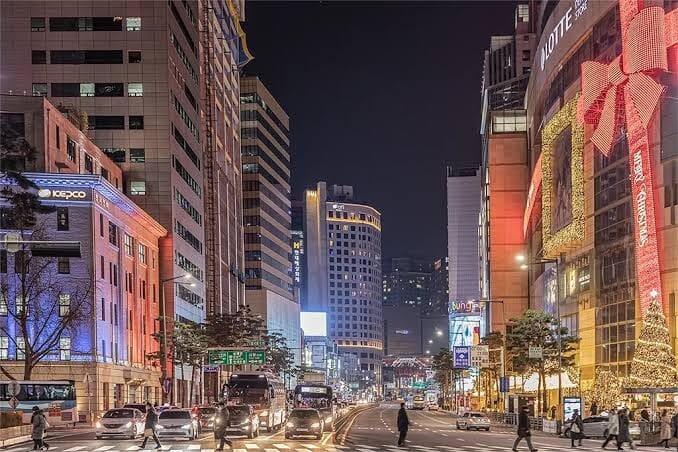
For a first visit built around palaces, Bukchon or Insadong, Namsan, markets and central shopping, Myeongdong is usually the least complicated base.
Myeongdong Station is on Line 4, while some hotels sit close enough to Euljiro 1-ga on Line 2 to use that line as well. That gives the area a useful central position without forcing the whole trip into one type of activity.
The trade-off is atmosphere. Myeongdong is highly visitor-oriented. If you want your hotel area itself to feel more residential or nightlife-driven, it can feel too polished around tourist demand.
It also does not have a direct Airport Railroad station, so the airport journey is less elegant than Hongdae’s direct rail connection.
Hongdae: Better When the Neighborhood Itself Is Part of the Trip

Hongdae is a stronger base when you want cafés, casual shopping, nightlife and a younger street atmosphere close to the hotel.
Hongik Univ. Station connects Line 2, the Gyeongui–Jungang Line and the Airport Railroad. That last connection matters when you arrive with luggage because the Airport Railroad all-stop train reaches Hongik Univ. Station directly from Incheon Airport.
The downside appears when most of your days are elsewhere. If the itinerary is dominated by royal-palace areas, traditional neighborhoods and central or eastern Seoul, staying farther west can mean repeated transit that eventually cancels out the airport convenience.
For the neighborhood itself, see Why Tourists Flock to Hongdae.
Gangnam: A Good Base Only When Your Itinerary Is Actually in Gangnam
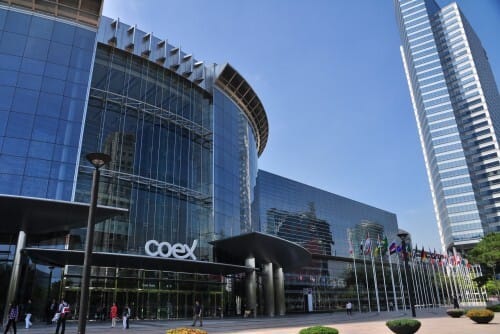
Gangnam is too broad to treat as one hotel zone. Gangnam Station, Samseong and Bongeunsa serve different parts of the district.
Gangnam Station is on Line 2 and the Sinbundang Line. The COEX area sits farther east, with Samseong on Line 2 and Bongeunsa on Line 9 serving that part of the district.
That geography matters. A hotel near Gangnam Station can be convenient for nightlife around Gangnam Station and still be less convenient for COEX than a hotel near Samseong or Bongeunsa.
If most sightseeing is around Gyeongbokgung, Bukchon, Insadong and Myeongdong, Gangnam adds repeated cross-river commuting. If most plans are already south of the river, the same location becomes efficient.
Choose the Station, Not the Neighborhood Label
Booking sites use broad neighborhood names because they are easy to understand. Your feet experience the exact station and exit.
- Myeongdong: check whether the hotel is actually closer to Myeongdong Station, Euljiro 1-ga or another nearby station.
- Hongdae: confirm the walk to Hongik Univ. Station if the Airport Railroad is part of your reason for booking there.
- Gangnam: do not assume “Gangnam” means convenient for both Gangnam Station and COEX.
A five-minute walk on a booking map can also feel different with luggage, stairs, rain or a large station complex. Use NAVER Map to inspect the actual route and the Seoul Subway Guide if this is your first trip.
Airport Convenience Matters Most on a Short Stay
Hongdae has the cleanest rail advantage from Incheon because Hongik Univ. Station is on the Airport Railroad all-stop route.
Myeongdong and Gangnam generally require another connection or a different airport-transfer option. That is not automatically a reason to avoid them. It simply matters more when you have heavy luggage, a late arrival or only a few nights in Seoul.
For the full airport decision, compare rail, bus and taxi options in Incheon Airport to Seoul: AREX, Bus or Taxi?.
The Shorter the Stay, the More Expensive a Bad Location Becomes
For 2–4 nights
Stay close to the majority of your must-do plans. There is less time for a neighborhood choice to “average out.” A classic sightseeing trip often pushes Myeongdong ahead; a nightlife-heavy trip can favor Hongdae; a COEX event can make Gangnam the obvious answer.
For a week or longer
You have more room to value price, room quality and neighborhood atmosphere because one longer subway ride matters less. Hongdae or Gangnam can be perfectly sensible even when some sightseeing days require longer travel.
Splitting a short Seoul stay between two hotels usually creates more luggage work than value. It becomes more reasonable only when a longer trip has clearly separate itinerary blocks.
A Better Decision Rule Than “Which Area Is Best?”
Look at the three places you will visit most often and the time of day you expect to return to the hotel.
Then choose the base that removes the most annoying repeated trip.
That is why Myeongdong is the safest default, Hongdae is stronger for nightlife and airport convenience, and Gangnam is strongest when south-Seoul plans are not occasional but central to the trip.
The neighborhood name is the headline. The station and the repeated commute are the actual decision.
Official Sources
- Seoul Tourism Organization — Myeongdong
- Seoul Tourism Organization — Hongdae
- Seoul Tourism Organization — COEX
- Seoul Tourism Organization — COEX Mall
- Seoul Tourism Organization — Gangnam Station / Seocho Tourist Information Center
- Korea Tourism Organization — Airport Railroad transportation guide
Transport services and hotel access can change. Check the exact station, exit and airport route before booking.