KOREA ESSENTIALS · MONEY ETIQUETTE
Tipping in Korea: Do You Tip or Bargain as a Tourist?
First Korea Trip · Updated August 27, 2026
Last fact-checked: August 27, 2026 · How we verify travel information
Tipping in Korea is usually unnecessary, and bargaining is not the normal way to shop in most places. At ordinary restaurants, cafés, and taxis, you can generally pay the stated amount without adding a tip. Bargaining can be appropriate in some flea markets and individual market stalls, but fixed prices are increasingly common even in traditional markets.
The easiest rule for a first trip is: check the price, pay the stated amount, and ask what an extra charge is for before assuming it is a tip or an overcharge.
QUICK ANSWER
- Restaurants and cafés: tipping is not normally required or expected.
- Taxis: pay the proper fare plus legitimate tolls or surcharges; a separate tip is not expected.
- Hotels: a voluntary tip can be a personal gesture, but check the bill first because some higher-end properties or restaurants may include a service charge.
- Most shops: treat the displayed price as fixed.
- Traditional and flea markets: some sellers may negotiate, but many stalls use fixed prices and you do not need to haggle.
- Unexpected extra charge: ask what it covers before deciding whether there is a problem.
| Situation | Normal expectation |
|---|---|
| Ordinary restaurant or café | Pay the bill; no percentage tip is normally expected. |
| Taxi | Pay the fare and legitimate extras; no separate tip is required. |
| Hotel or upscale restaurant | Check whether a service charge is already included. |
| Convenience store, chain or department store | Treat the displayed price as fixed. |
| Traditional market | Many prices are fixed; a polite discount question may be acceptable in some stalls. |
| Flea or secondhand market | Negotiation may be more common, depending on the vendor. |
Tipping in Korea: The Basic Rule
The Korea Tourism Organization states that tipping is not required or expected in Korea. That is the best starting point for everyday travel: you do not normally calculate an extra 15% or 20% after a meal, leave cash on a café table, or add a gratuity to a normal taxi ride.
If a meal costs ₩15,000, the normal expectation is that you pay the amount shown on the bill or payment terminal. Good service does not automatically create an obligation to pay more.
This is why not tipping should not be read as dissatisfaction. In most everyday situations, it is simply the standard way to pay.

Restaurants and Cafés: Pay the Listed Bill
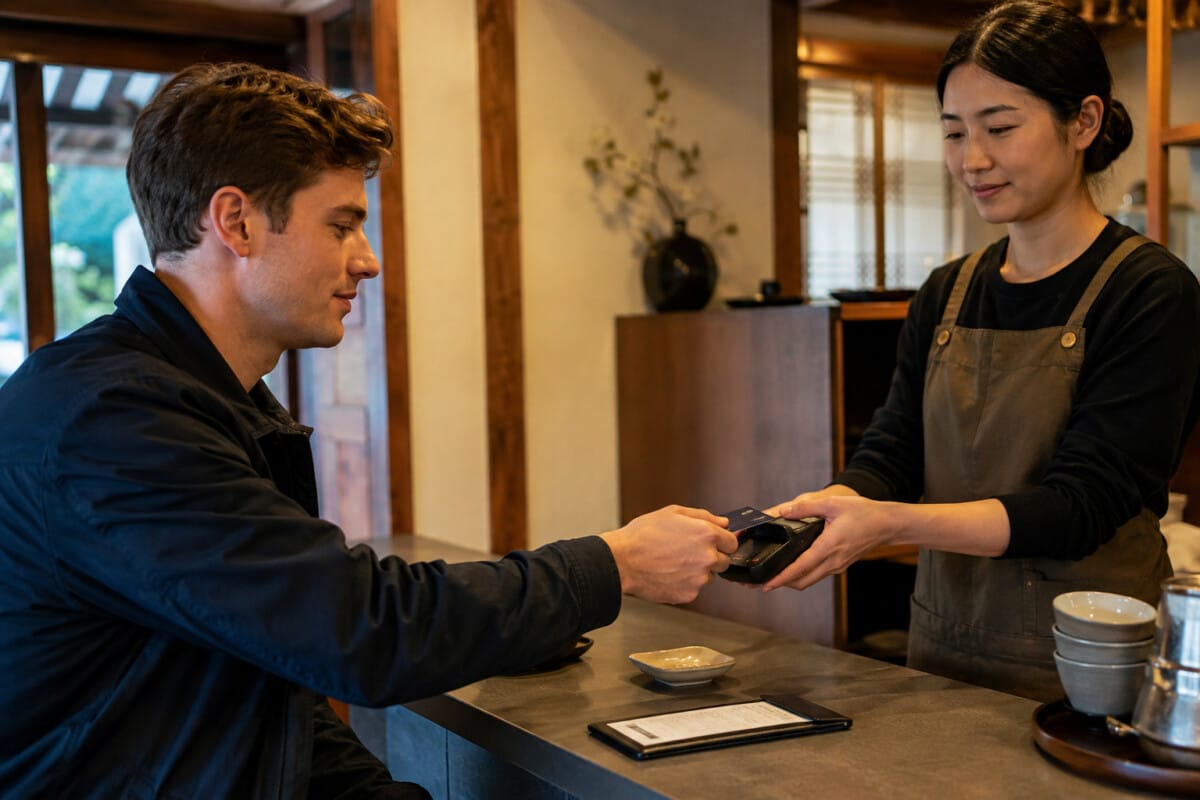
At an ordinary Korean restaurant or café, pay the total shown at the counter, kiosk, table terminal, or register. You do not normally need to leave cash on the table or add a percentage for table service.
VISITKOREA also notes that ordinary requests for more water or standard side dishes do not incur an extra charge. This does not mean every additional food item is free: separately ordered dishes, premium add-ons, or menu items with their own price should still be treated as normal purchases.
At some major hotels and upscale restaurants, a service charge may already appear on the bill. If you see a separate amount, check what it is before assuming that staff are asking for an optional tip.
Taxis and Hotels: Tipping Is Still Optional
Taxi drivers in Korea do not generally expect tips. Paying the exact proper fare by card, app, or cash is normal. You do not need to round a ₩18,700 fare up to ₩20,000 as a cultural requirement.
What matters more is understanding the fare itself. In Seoul, official taxi guidance lists legitimate additions such as tolls, late-night surcharges, and out-of-city surcharges. Those are fare components, not tips.
Hotels follow the same general principle: a cash tip is not a standard obligation. If a member of staff provides exceptional personal help and you choose to give something extra, treat it as a voluntary gesture rather than a required part of the service.
Can You Bargain in Korea?
Usually, you should not expect to bargain. Most modern retail in Korea works on displayed prices, promotions, coupons, or membership discounts rather than one-to-one negotiation with the cashier.
- Normally fixed-price: convenience stores, supermarkets, department stores, chain stores, cafés, ordinary restaurants, cinemas, and official attractions.
- Sometimes more flexible: flea markets, secondhand markets, and some independent traditional-market stalls.
- Best default: if a price is clearly displayed, assume that is the price unless the seller indicates otherwise.
If something feels expensive, comparing another store is usually more natural than repeatedly pushing one seller for a lower price.
Traditional Markets: Fixed Prices and Bargaining Can Both Exist
Traditional markets are not all the same, which is why broad advice such as “always haggle in Korea” is misleading.
In 2026, the Ministry of Culture, Sports and Tourism and the Korea Tourism Organization launched a service-improvement campaign with eleven traditional markets that specifically promotes fixed pricing and card acceptance. Participating markets include Mangwon Market and Gyeongdong Market in Seoul, Haeundae Market in Busan, Seomun Market in Daegu, and Dongmun Traditional Market on Jeju Island.
At the same time, official VISITKOREA guidance for Hwanghak-dong Flea Market says that while some prices are fixed, many vendors are open to bargaining. That is a good example of the real rule: the type of market and the individual seller matter.
- If the price is clearly displayed, paying it without bargaining is completely normal.
- If you are buying several items from one independent seller, asking once for a small discount can be reasonable.
- If the seller says the price is fixed, accept the answer rather than repeatedly negotiating.
- Do not assume a traditional market automatically means every price is negotiable.
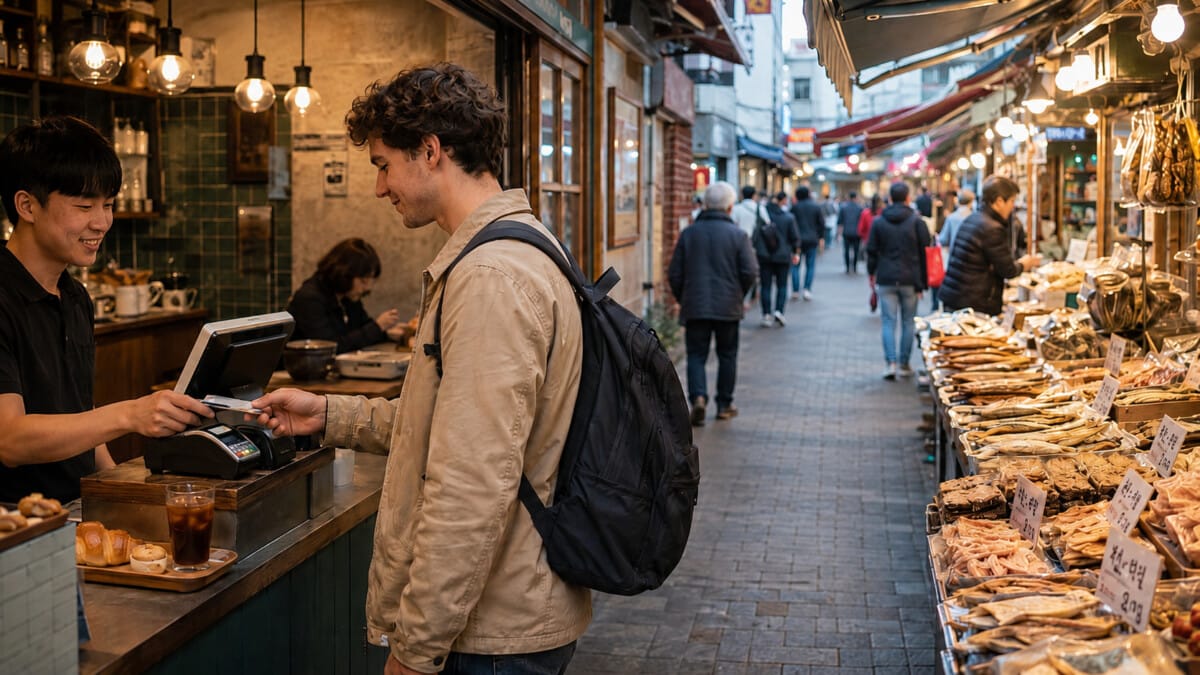
What If Someone Asks for a Tip or Extra Money?
Do not judge the situation from the word “extra” alone. First ask what the additional amount covers.
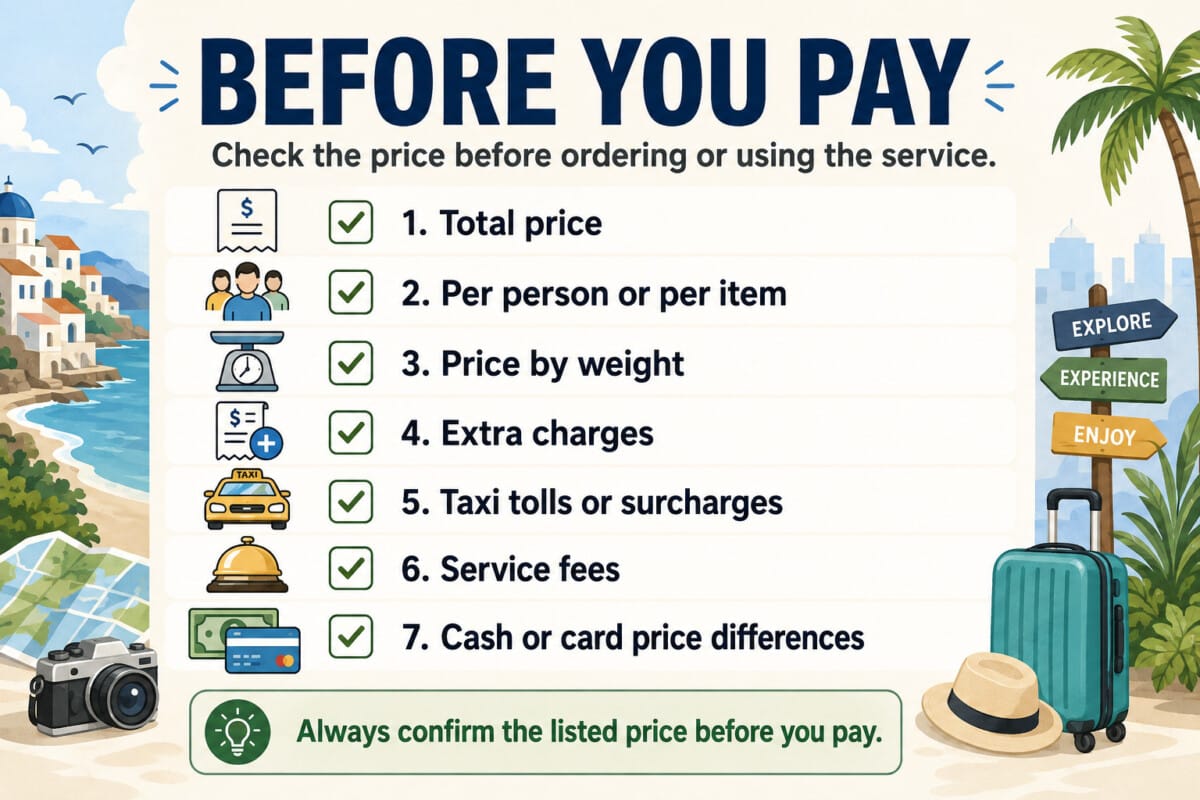
- A taxi total can include a legitimate toll or surcharge.
- A hotel or upscale restaurant may show a service charge.
- A restaurant bill can increase because you ordered an additional menu item.
- A booking or service may have a disclosed fee that was part of the original terms.
The useful question is: “Was this charge clearly explained or part of the stated price before I agreed?”
If the requested amount does not match the displayed, quoted, metered, or agreed price and the business cannot explain the difference, see our guide to avoiding and reporting overcharging in Korea →.
Money Etiquette Mistakes Tourists Can Avoid
- Do not add a tip automatically. Check whether the place actually expects one before applying habits from home.
- Do not assume every market price is negotiable. Fixed-price stalls are common and are becoming more explicit.
- Do not confuse a surcharge with a tip. Ask what the charge covers.
- Do not keep bargaining after a clear “no.” Compare another seller instead.
- Do not wait until after the purchase to clarify an unclear price. Ask whether the amount is per item, per person, by weight, or for a set before agreeing.
FAQ
Is it rude not to tip in Korea?
No. Official Korean tourism guidance says tipping is not required or expected. At ordinary restaurants, cafés, and taxis, paying the stated amount is normal.
Should I leave the change for a taxi driver?
You do not need to. Seoul’s official tourism guidance says taxi drivers do not expect tips. Paying the correct fare is acceptable, while any decision to leave small change is voluntary.
Do I have to bargain at traditional markets?
No. Many stalls use fixed prices, and a 2026 Korea Tourism Organization campaign is actively promoting fixed pricing at participating traditional markets. Some independent or flea-market vendors may still negotiate.
Can I ask for a discount if I buy several items?
At an independent market stall or flea market, asking once and politely can be reasonable. If the seller says the price is fixed, accept that answer.
Does an extra charge mean I am being overcharged?
Not necessarily. Tolls, taxi surcharges, service charges, additional orders, and disclosed fees can legitimately change the total. Ask what the amount covers and compare it with the price or terms you agreed to.
Official Sources
- VISITKOREA — About Korean Food: Tipping Guidance
- Visit Seoul — Money and Tipping Information
- VISITKOREA — 2026 Traditional Market Fixed-Pricing Campaign
- VISITKOREA — Flea Market Shopping and Bargaining Tips
- Seoul Metropolitan Government — Taxi Fares, Tolls and Surcharges
The simple version: in Korea, you usually pay the price you see. Tipping is generally unnecessary, bargaining is limited to certain market settings, and an unfamiliar extra charge should be checked before you decide that it is improper.
Travel practices, prices, service charges, and market policies can change. Check current information at the business or official source when a specific charge matters to your decision.