KOREA ESSENTIALS · SEOUL TRANSPORT
Seoul Climate Card vs T-money: Which Is Better for Tourists?
First Korea Trip · Updated August 31, 2026
Last fact-checked: August 31, 2026
For most first-time visitors, the choice is simple: use a Climate Card if you will spend several consecutive days moving around Seoul by subway and bus, and use T-money if you want maximum flexibility, plan to travel outside Seoul, or expect only a few public-transport trips each day.
One important 2026 update: Seoul’s monthly Climate Card system is changing for residents from September 1, 2026, but the tourist-focused 1-, 2-, 3-, 5-, and 7-day Climate Card passes continue. The new Climate Pass is mainly a resident program and is not the product most short-term foreign tourists need to compare with T-money.
Quick answer
Choose a Climate Card if:
- most of your trip is inside the Climate Card service area;
- you expect roughly two to four separate transit trips per day, depending on pass length;
- you want to stop thinking about your remaining transit balance; and
- your sightseeing days are consecutive.
Choose T-money if:
- you will travel outside Seoul or use transport not covered by the Climate Card;
- you take public transport only occasionally;
- you want one card that works across Korea;
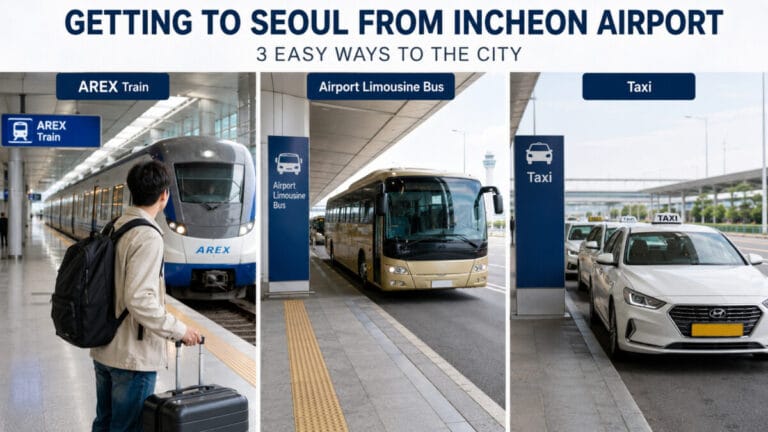
- you need a card for the AREX all-stop train from Incheon Airport into Seoul; or
- you already own a T-money card and do not expect enough rides to justify another pass.
Best option for many tourists: carry T-money for nationwide flexibility and buy a short-term Climate Card only when you have several transit-heavy days in Seoul.
Climate Card vs T-money at a Glance
| Feature | Climate Card short-term pass | T-money |
|---|---|---|
| Pricing | Fixed price for 1, 2, 3, 5 or 7 days | Pay per ride |
| Pass prices | ₩5,000 / ₩8,000 / ₩10,000 / ₩15,000 / ₩20,000 | No fixed pass price |
| Physical card cost | ₩3,000 separately | Usually about ₩3,000–₩5,000 for a general card |
| Main coverage | Defined Seoul-centered service area | Public transportation nationwide |
| Subway/bus rides | Unlimited within covered services during validity | Balance deducted by fare |
| Incheon Airport arrival | Cannot board AREX at T1/T2 | Works on AREX all-stop trains |
| Incheon Airport departure | Can exit at T1/T2 after boarding in the valid area | Works normally on AREX all-stop trains |
| Best for | Transit-heavy sightseeing in Seoul | Flexible travel across Seoul and Korea |
In this guide
First, Ignore the New Climate Pass Unless You Live in Seoul
This is the part most likely to confuse tourists in late 2026.
Seoul is replacing its old 30-day Climate Card program for residents with the Climate Pass system beginning September 1, 2026. Climate Pass is connected to the national K-Pass/Everyone’s Card system and has residency and registration requirements.
That change does not remove the short-term tourist Climate Card. Seoul officially states that the 1-, 2-, 3-, 5-, and 7-day Climate Card short-term passes will continue. If you are visiting Seoul for a few days, those are the passes relevant to you.
This guide therefore compares the tourist short-term Climate Card with ordinary prepaid T-money, not the resident Climate Pass.
How Much Does the Tourist Climate Card Cost?
| Pass | Price | Rough break-even vs ₩1,550 subway rides* |
|---|---|---|
| 1 day | ₩5,000 | 4 separate rides |
| 2 days | ₩8,000 | 6 separate rides total |
| 3 days | ₩10,000 | 7 separate rides total |
| 5 days | ₩15,000 | 10 separate rides total |
| 7 days | ₩20,000 | 13 separate rides total |
*This is a simple comparison using Seoul’s adult subway base fare of ₩1,550. Real T-money spending can be lower or higher because of transfer discounts, distance-based fares, bus types and route choices.
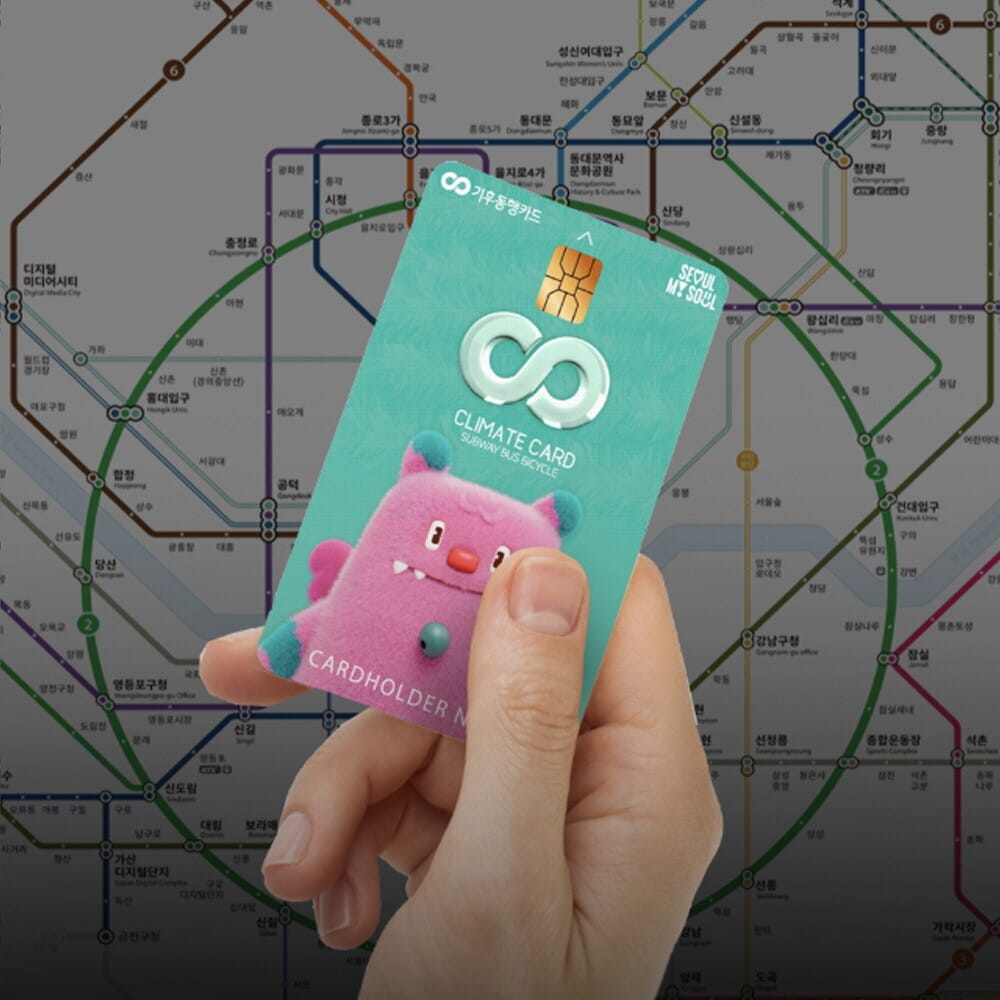
The physical Climate Card itself costs another ₩3,000. Short-term passes cannot be loaded in advance for a future start date: the validity period starts on the date you charge the pass. A one-day pass is not a rolling 24-hour pass, so avoid activating it late at night unless you plan to use it immediately.
When Does the Climate Card Actually Save Money?
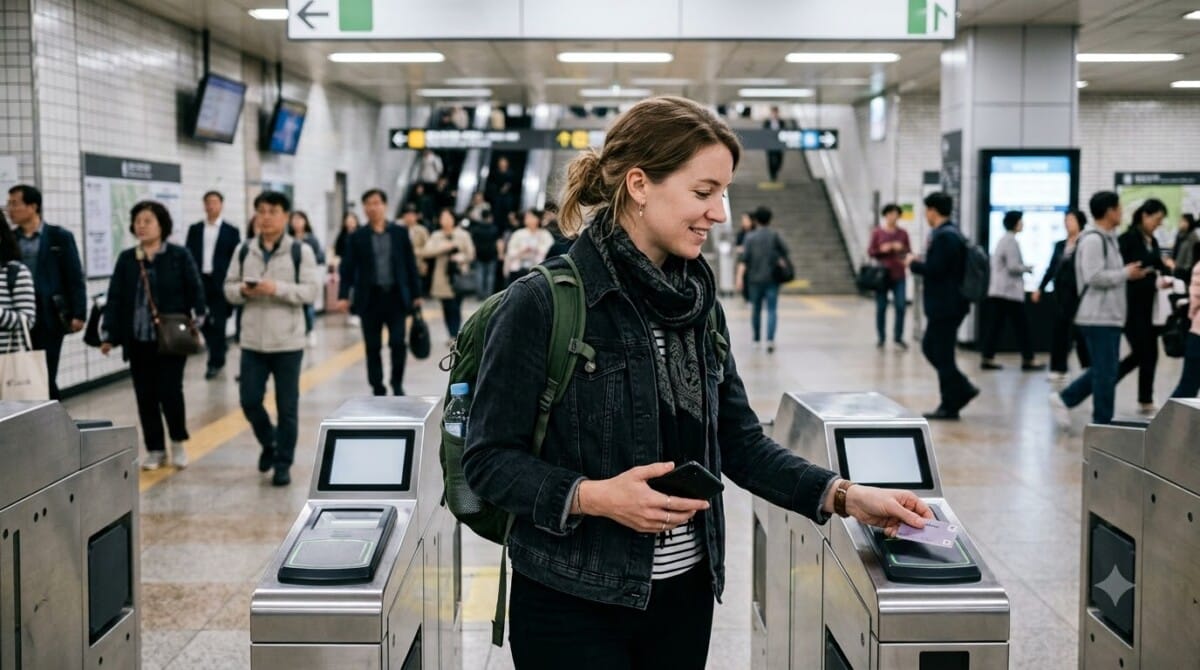
The longer the pass, the easier it is to make the math work. A one-day pass costs ₩5,000, so two basic subway trips would usually cost less with T-money. Four separate base-fare subway rides can already cross the simple one-day break-even point.
A seven-day pass costs ₩20,000. At a ₩1,550 base subway fare, 13 separate rides would exceed the pass price, which is fewer than two separate rides per day over seven days.
There is one important catch: T-money transfers are discounted. A bus-to-subway transfer within the integrated-fare rules does not necessarily mean paying another full base fare. Do not count every tap as a separate ₩1,550 journey.
- Light schedule: one round trip per day → T-money is often simpler.
- Normal sightseeing: two or three separate journeys per day → compare by pass length; the 3-, 5- and 7-day Climate Cards become increasingly attractive.
- Heavy sightseeing: multiple neighborhoods plus evening trips → Climate Card is usually easier if all routes are covered.
Where the Climate Card Works
The Climate Card covers Seoul-licensed city and town buses, including night buses, plus designated subway sections centered on Seoul. Its coverage does not mean every subway station in the wider Seoul metropolitan area.
Important exclusions include the Sinbundang Line, subway sections outside the official service range, non-Seoul-licensed buses, intercity buses and airport buses. If you board inside the valid area and try to exit outside the service range, a separate fare may be required.
This matters for day trips. A route that looks like part of the same subway network on a map is not automatically Climate Card-compatible. If you are planning Suwon, distant Gyeonggi destinations, Busan or other cities, T-money is the safer general-purpose card.
For route planning in Korea, see our NAVER Map guide for tourists.
Which Card Is Better From Incheon Airport?

Arriving at Incheon Airport: T-money wins
A Climate Card cannot be used to board the Airport Railroad at Incheon International Airport Terminal 1 or Terminal 2. A newly arrived tourist therefore cannot simply tap a Climate Card onto AREX at the airport for the ride into Seoul.
T-money works on the AREX all-stop train, while the AREX Express uses its own ticketing. For a full comparison, see Incheon Airport to Seoul: AREX, Bus or Taxi?.
Going from Seoul to Incheon Airport: Climate Card can work
There is an exception in the other direction. If you board AREX within the Climate Card’s valid service area, you can travel toward Incheon International Airport and exit at Terminal 1 or Terminal 2. You still cannot use the Climate Card to board at T1 or T2.
Incheon Airport → Seoul: use T-money or another valid airport ticket.
Seoul → Incheon Airport: a valid Climate Card can be used on the eligible AREX route to exit at T1 or T2.
T-money Is Better If You Are Traveling Around Korea
T-money’s biggest advantage is flexibility. It can be used for public transportation throughout Korea and is widely accepted across subways and buses. Depending on the service, it can also be used for taxis and at participating stores.
- Seoul plus Suwon
- Seoul plus Incheon outside Climate Card coverage
- Seoul plus Busan or other cities
- frequent transport types excluded from Climate Card.
If you need the full setup process, see How to Use a T-money Card in Korea: A Tourist Guide.
Buying and Recharging in 2026

Seoul installed new transit-card vending machines across Lines 1–8 that accept internationally issued credit and debit cards for Climate Card purchases and short-term pass recharges. The city states that Visa and Mastercard are supported, and an average service fee of about 3.7% applies when an international card is used.
For a physical T-money card, Korean won cash is still the safest assumption for standard purchase and top-up workflows. Mobile T-money options have expanded, but device, wallet and card-network support can differ. Keeping some Korean won available remains the least complicated backup.
Do You Need Both?
Not always, but carrying both can make sense.
- Use T-money when you arrive at Incheon Airport.
- Keep it as your backup card and for routes outside Climate Card coverage.
- Activate a 3-, 5- or 7-day Climate Card when your Seoul-heavy sightseeing period begins.
- Switch back to T-money for day trips or after the short-term pass expires.
Which Card Should You Buy for a 3-, 5- or 7-Day Seoul Trip?
3 days in Seoul
The Climate Card costs ₩10,000. It becomes competitive quickly if you make several separate journeys between neighborhoods such as Myeongdong, Hongdae, Gyeongbokgung, Seongsu and Jamsil. If you mostly walk and make one round trip each day, T-money can still be cheaper.
Recommendation: Climate Card for active sightseeing; T-money for a slow, neighborhood-focused itinerary.
5 days in Seoul
The Climate Card costs ₩15,000. Ten separate ₩1,550 subway rides would already exceed the pass price before considering longer-distance fares.
Recommendation: Climate Card is a strong choice if most days are spent inside Seoul. Keep T-money if you have a day trip outside the coverage area.
7 days in Seoul
The standard 7-day Climate Card costs ₩20,000. Thirteen separate base-fare subway trips would exceed ₩20,000, fewer than two per day on average.
Recommendation: Climate Card for a Seoul-focused week; T-money if the week includes substantial travel elsewhere in Korea.
A Simple Decision Rule
- Arriving from Incheon Airport? Use T-money or the appropriate airport ticket for the inbound trip.
- Most of the next 3–7 days inside Seoul? Consider a short-term Climate Card.
- Roughly two or more separate public-transport journeys per day? Longer Climate Card passes become increasingly attractive.
- Visiting Suwon, Busan or destinations outside the service area? Keep or use T-money.
- Still unsure? T-money is the safer default. You can buy a Climate Card later when a transit-heavy run of Seoul sightseeing begins.
FAQ
Can tourists still buy a Climate Card after September 1, 2026?
Yes. Seoul’s resident monthly program is changing, but the tourist short-term Climate Card passes in 1-, 2-, 3-, 5- and 7-day versions continue.
Is the Climate Card unlimited?
It provides unlimited rides on covered public transportation during the selected validity period. It does not cover every transport service or every station in the wider metropolitan area.
Does the short-term Climate Card include Ttareungi bikes?
No. Seoul’s official Climate Card page states that the short-term passes do not include Ttareungi or Hangang Bus.
Can I use the Climate Card from Incheon Airport to Seoul?
No. You cannot board AREX at Incheon Airport Terminal 1 or Terminal 2 with the Climate Card.
Can I use it from Seoul to Incheon Airport?
Yes, under the AREX exception: board within the valid service area and exit at Incheon Airport T1 or T2. Do not confuse this with the AREX Express ticket.
Is T-money cheaper than the Climate Card?
It depends on how much you ride. T-money is often cheaper for light use. Climate Card becomes more attractive as the number of separate journeys increases, particularly on longer 3-, 5- and 7-day passes.
Can I use T-money outside Seoul?
Yes. T-money’s official tourist information states that it can be used for public transportation nationwide.
Can I buy a Climate Card with a foreign credit card?
Yes, at designated new transit-card vending machines. Seoul says international credit and debit cards are supported for short-term passes, with an average international-card service fee of about 3.7%.
Official Sources
- Seoul Metropolitan Government — Climate Card
- Seoul Metropolitan Government — Climate Pass launch and 2026 transition
- Seoul Metropolitan Government — continued tourist short-term passes
- Seoul Metropolitan Government — international card payments
- Seoul Metropolitan Government — Subway fares
- Tmoney — Tmoney Travel Card
- VISITKOREA — Transportation Cards
✓ The simple version
If you are staying in Seoul and taking the subway or bus repeatedly for several consecutive days, the short-term Climate Card is usually the better value and the easier card to use. If your itinerary is light, includes trips outside Seoul, or you want one transportation card for your whole Korea trip, use T-money. Start with T-money for the airport ride, then buy a Climate Card in Seoul if your sightseeing schedule makes the unlimited pass worthwhile.
Travel information can change. Fares, service areas and card-payment options were checked against official sources on August 31, 2026. Recheck the Seoul Metropolitan Government and Tmoney websites before travel if your itinerary depends on a specific route.