KOREA ESSENTIALS · SEOUL BUS
Seoul Bus Guide for Tourists: How to Ride It for the First Time
First Korea Trip · Updated September 9, 2026
Last fact-checked: September 9, 2026 · How we verify travel information
Seoul buses are useful once you know the routine. The ride itself is not the difficult part. First-time visitors are more likely to get stuck on the stop, the direction, or what to do before getting off.
This Seoul bus guide for tourists covers the full first ride: how to find the right bus, board it, pay, request your stop, tap off, and transfer without guessing your way through the system.
QUICK ANSWER
- Open NAVER Map and choose the bus route it gives you.
- Check the exact bus number, boarding stop, and direction of travel.
- Board through the front door and tap your transportation card.
- Press the stop button before your stop.
- Tap the same card again at the rear-door reader and get off through the back door.
The one habit worth making automatic is tap when you get on, tap again when you get off.
| Quick fact | What to know |
|---|---|
| Regular blue/green bus adult fare | ₩1,500 by transportation card |
| Village bus adult fare | ₩1,200 by transportation card |
| Rapid/metropolitan bus adult fare | ₩3,000 by transportation card |
| Late-night N bus adult fare | ₩2,500 by transportation card |
| Normal boarding / exit | Front door / rear door |
| Transfer window | Normally 30 minutes after tapping off; 60 minutes from 9 PM to 7 AM |
| Transfer limit | Up to 4 transfers, for up to 5 boardings |
| Important | Same-route reboarding does not qualify for the transfer discount |
1. Find the Route in NAVER Map Before You Walk to the Stop
For a first ride, do not try to understand Seoul’s whole bus network. You do not need to memorize every color or decode every route number.
Search your destination in NAVER Map, open public-transit directions, and check four things:
- the bus number;
- the exact stop where you board;
- the direction of the route;
- the stop where you get off.
NAVER Map provides real-time bus information in Seoul, including bus positions and stop arrival estimates. If English search is giving you poor results, the First Korea Trip NAVER Map guide explains how Korean place names can make searches more reliable.
2. Make Sure You Are at the Correct Stop — Not the One Across the Street
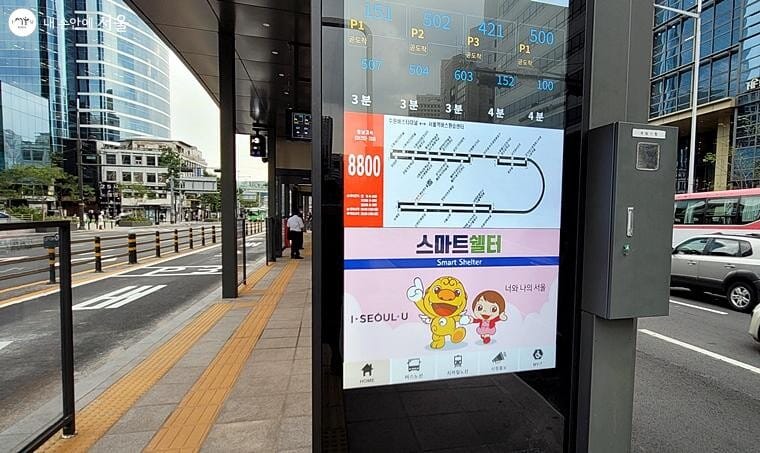
A bus route runs in two directions, and the return-direction stop may be across the street or around the corner. Similar stop names do not mean the bus is going where you want.
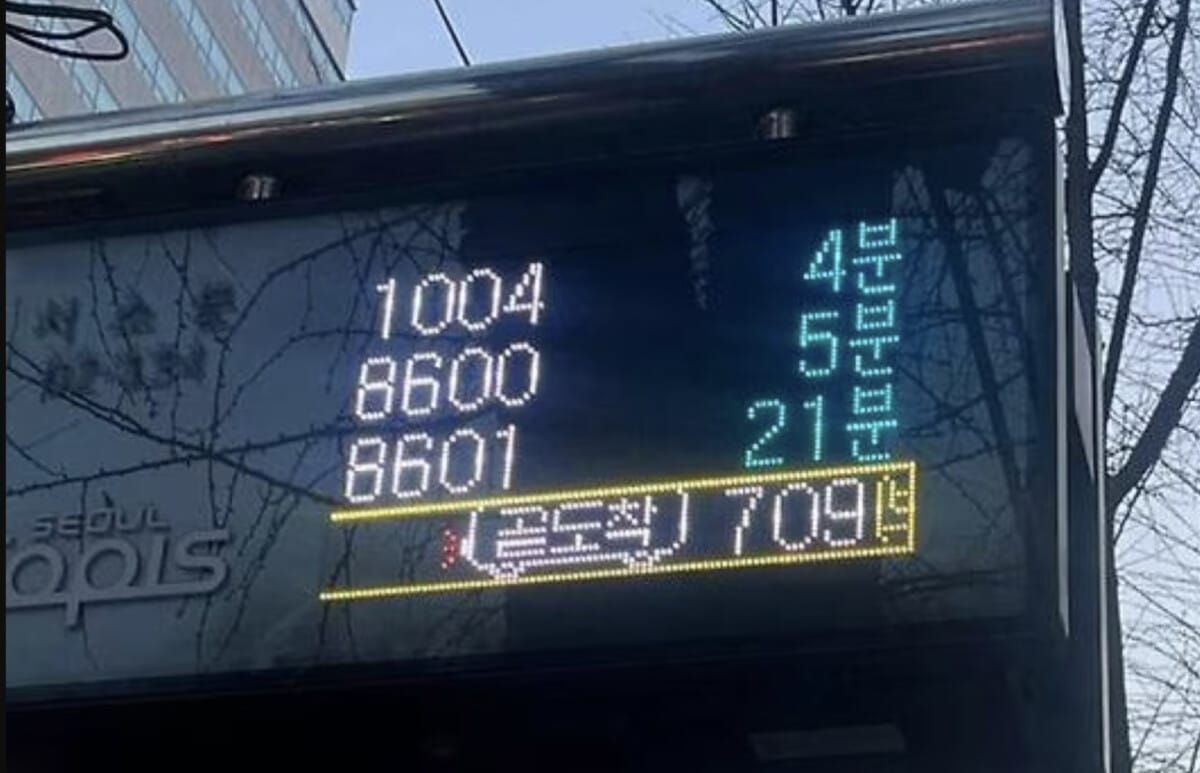
Before boarding, compare the bus number and the next few stops shown in NAVER Map. If the physical stop shows a stop ID, that gives you another way to check. NAVER also supports searching by bus number and stop number.
If the next stops shown in the app are moving away from your destination, you are probably on the wrong side of the road.

3. Board Through the Front Door and Tap Your Card
Seoul’s normal bus flow is front-door boarding and rear-door exit. When the bus arrives, enter through the front and tap your transportation card on the reader next to the driver. Wait for the confirmation sound before moving farther inside.
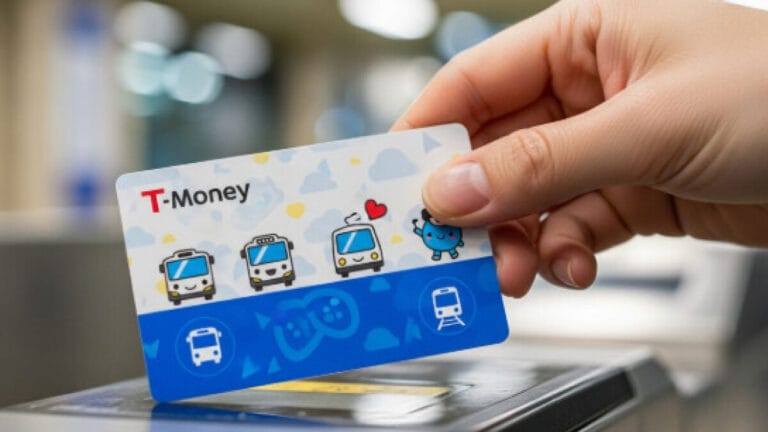
T-money is the most practical option for most visitors because the same card works across buses and the subway. If you have not set one up yet, see the T-money Card in Korea guide.
Can you pay cash?
Some Seoul buses still list cash fares, but do not plan a trip around cash payment. Seoul operates designated cashless bus routes and publishes the route list. A transportation card is the reliable option for tourists and is also what you need for the normal transfer-discount system.
4. Keep NAVER Map Open While You Ride
Keep the route open on your phone until you are comfortable with the system. Buses provide onboard stop information, but the map gives you a second reference. Watch your position along the route and pay attention when you are one or two stops away.

This matters more on a bus than on the subway because you need to request your stop before the bus reaches it.
5. Press the Stop Button Before Your Stop
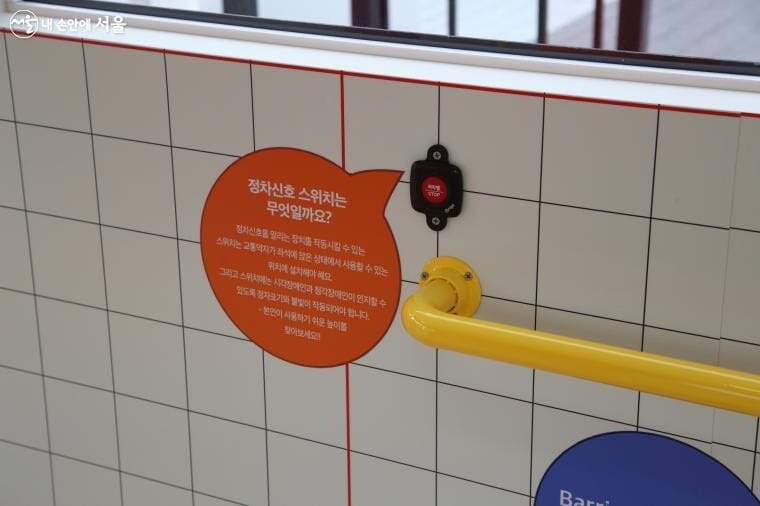
Look for the red stop buttons around the bus. Press one after the bus has left the previous stop and before it reaches yours. Seoul’s official passenger guide tells riders to press the bell before arrival rather than waiting until the last moment.
If somebody has already pressed the button, you do not need to press it again.
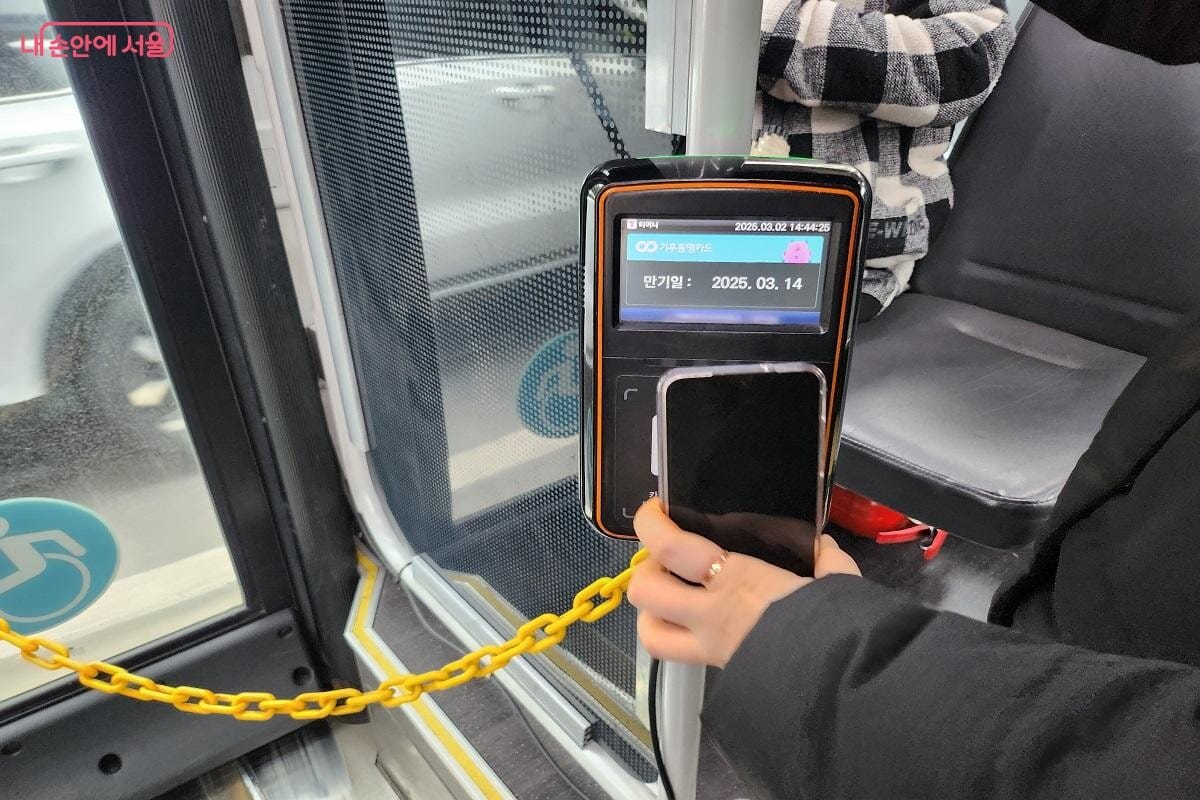
6. Tap Again and Get Off Through the Back Door
When your stop is approaching, move toward the rear door if it is safe to do so. Before exiting, tap the same transportation card on the reader near the back door, then get off through the rear door.
Tap off every time. Seoul’s integrated fare system uses the exit tap for transfer and distance calculations. Forgetting it can break the transfer chain and lead to extra fare later.
7. How Bus Transfers Work in Seoul
Seoul’s integrated transfer system links buses and the subway. The basic sequence is simple:
- tap when boarding;
- tap when getting off;
- board the next eligible bus or subway within the transfer window.
The normal transfer window is 30 minutes after the previous tap-off. From 9 PM to 7 AM, it extends to 60 minutes. Up to four transfers are recognized, which means up to five boardings in one connected journey.
Same-route reboarding does not count as a discounted transfer. The system can also add distance-based charges once the combined journey exceeds the base distance.
If you are deciding between regular transit cards and Seoul’s unlimited-use option, see Seoul Climate Card vs T-money.
8. Which Seoul Bus Colors Actually Matter to a Tourist?
You can use Seoul buses without memorizing the colors, but the basic pattern is useful:
- Blue: trunk routes connecting major parts of Seoul.
- Green: branch routes serving local areas and connections to subways or larger bus routes.
- Village buses: short neighborhood routes, often useful in residential areas and on hills.
- Red: rapid/metropolitan routes connecting Seoul with surrounding areas.
- N buses: Seoul’s late-night bus network.

For normal sightseeing, the route number and destination matter more than the color. Follow the route your map gives you instead of choosing a bus because it looks like the right type.
9. When the Bus Is Better Than the Subway
The subway is usually easier on a first visit because station sequences and line changes are visually straightforward. The bus becomes valuable when it removes a long walk or an awkward transfer.
- your destination is far from a subway station;
- a direct bus avoids a subway transfer;
- you are heading uphill;
- the map shows a clearly simpler surface route.
For large suitcases, crowded city buses are usually less convenient. Compare the route with the Seoul Subway Guide for Tourists before deciding.
10. Common First-Time Mistakes
Getting on the right number in the wrong direction
Check the next stops, not only the bus number.
Forgetting to press the stop button
Request the stop before arrival.
Forgetting to tap when getting off
Tap off every time so the transfer and fare record stays correct.
Assuming cash will always work
It will not. Seoul has cashless routes. Use a transportation card.
Looking only at the bus color
The route number, boarding stop, and direction matter more.
Waiting until the doors open to start moving
If the bus is crowded, get ready a little early. Do not wait until the last second to reach the rear door.
Seoul Bus FAQ
Do I need to tap my T-money card when I get off a Seoul bus?
Yes. Tap off at the rear-door reader. It keeps the transfer and fare calculation correct.
Can I use the same T-money card for two people on a bus?
A driver can set the reader for multiple passengers if you tell them the number of riders. Separate cards are usually simpler for tourists, especially if the trip will include a subway transfer.
Can I use a subway single-journey ticket on a bus?
No. A subway single-journey ticket is for the subway. Use T-money or another accepted transportation card on buses.
What if I miss my stop?
Stay on the bus, check the route in NAVER Map, and get off at the next practical stop. Recalculate from there rather than rushing toward a closed door.
What should I do if I am using buses late at night?
Check whether an N bus covers your route and confirm the live route before relying on it. If you miss the last subway, see the late-night transport guide.
Official Sources
- Seoul Metropolitan Government — Public Transportation / How to Use Seoul Bus
- Seoul Metropolitan Government — Bus Types, Fares and Transfer Rules
- Seoul Metropolitan Government — Integrated Transfer Discount System
- Seoul Metropolitan Government — Cashless Bus Route List (2026)
- NAVER Map Help — Real-Time Bus Information
The simple version
Use NAVER Map to find the exact bus and exact stop. Board at the front and tap your card. Watch the route, press the stop button before your stop, tap again at the back door, and get off.
The bus network is large. The passenger routine is not.
Routes, fares, and operating rules can change. Check Seoul’s official transportation pages and your map app for current information before travel.