HELP & PROBLEMS · OVERCHARGING
How to Avoid Getting Overcharged in Korea as a Tourist
First Korea Trip · Updated August 27, 2026
Last fact-checked: August 27, 2026 · How we verify travel information
Getting overcharged in Korea is not something most travelers should expect on every purchase, but unclear prices and unfair charges can happen. The safest approach is simple: check the price before you agree, confirm what the price includes, keep the receipt, and use an official complaint channel if the final charge does not match what was displayed or agreed.
Taxi fares deserve special attention because a higher total is not automatically a scam. Legitimate meter charges, tolls, late-night surcharges, out-of-city surcharges, or approved fare plans may apply. The key is whether the charge follows the official fare system and matches what you were shown.
QUICK ANSWER
- Check the price first. If the menu, label, weight, quantity, or service fee is unclear, ask for the total before ordering or buying.
- For taxis, use the meter or an official app estimate. Check tolls and surcharges separately instead of assuming every extra charge is improper.
- Keep evidence. Save the receipt or card record and photograph the menu, price tag, taxi plate, or app fare screen when something looks wrong.
- Ask for clarification before paying again. A translation app or 1330 can help if language is the problem.
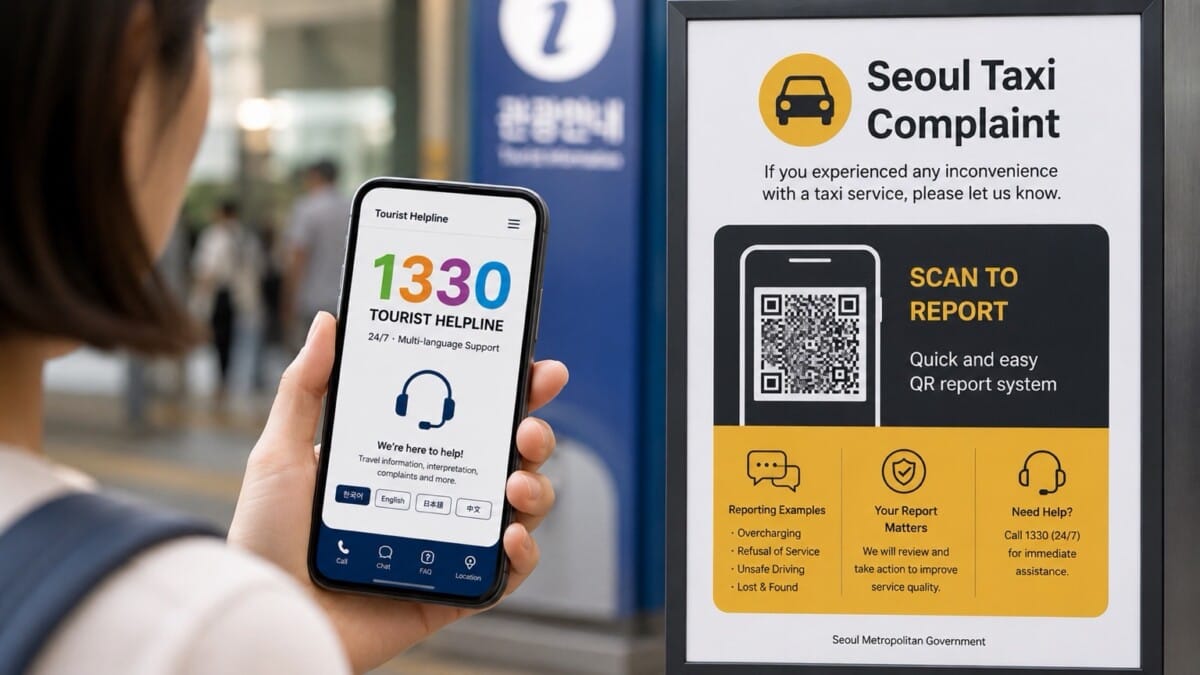
- Use official help channels. Call 1330 for tourist assistance and complaints; in Seoul, taxi complaints can also be filed through the city QR system or 120.
| Situation | Best move |
|---|---|
| Price is unclear | Ask for the total price and unit before agreeing. |
| Taxi fare looks wrong | Check the meter, toll, surcharge, app estimate, and receipt. |
| You already paid | Keep the receipt or card record and note the business or taxi details. |
| General tourist complaint | Use the 1330 Korea Travel Helpline / Tourist Complaint Center. |
| Seoul taxi complaint | Use the taxi QR complaint system or 120 Dasan Call Center. |
| Immediate threat or crime | Call police at 112. |
Getting Overcharged in Korea: What Actually Counts?
A price that feels expensive is not necessarily an overcharge. The important question is whether the final charge matches the displayed, quoted, metered, or otherwise agreed price.
- Possible warning sign: the final price suddenly changes after you have already ordered or received the service.
- Possible warning sign: a taxi driver asks for an amount that does not match the meter, approved fare plan, toll, or app record.
- Possible warning sign: a shop or restaurant cannot explain a large difference between the displayed price and the amount requested.
- Not automatically an overcharge: a legitimate surcharge, toll, larger portion, weight-based price, or clearly disclosed premium price.
Seoul has treated overcharging as a real tourism-service issue, but the official data also shows why travelers should avoid assuming every complaint proves misconduct. From June through December 2025, foreign passengers filed 487 reports through Seoul’s taxi QR complaint system, with unfair fares the most common complaint category; after investigation, eight cases were confirmed as violations.
How to Avoid Getting Overcharged in Korea Before You Pay
The easiest time to prevent a dispute is before you order, enter a service, or hand over payment. If anything about the price is ambiguous, clarify it while you can still walk away.
- Read the full price. Check whether it is per item, per person, per set, or based on quantity or weight.
- Confirm add-ons. Ask whether extras, service items, delivery, tolls, or optional upgrades are included.
- Take a quick photo when needed. A menu, price tag, quotation, or app estimate can help later if the amount changes.
- Use a payment method that leaves a record when practical. A card transaction record can help establish what you paid, even though payment acceptance varies by business.
- Do not rely on a verbal assumption. If a price matters to your decision, get the number clear before saying yes.
Taxi Overcharging: Check the Meter, Toll and Surcharges
Taxi disputes are one of the clearest cases where official records can help. Seoul says ordinary taxi fares generally follow the meter, while approved exceptions and separate fare plans exist. Legitimate tolls and surcharges can also raise the total.
Before or during the ride, use a taxi app that shows an estimated fare when available. Seoul has also been improving foreigner-facing taxi apps and receipts so terms such as meter fare and toll fee are shown separately. This makes it easier to see why the final amount changed.
- Make sure the trip is being recorded correctly. If you are using a metered taxi, the meter should be operating.
- Check the app estimate, but treat it as an estimate. Traffic, route, tolls, and legitimate surcharges can affect the final fare.
- Look at tolls separately. A road toll can be added to the driving fare.
- Keep the receipt. Seoul has introduced clearer English taxi receipt information, including surcharge details.
- Record the license plate if there is a dispute. Seoul’s 120 taxi complaint guidance specifically asks passengers to remember the full plate number.
If you mainly use buses and the subway instead of taxis, standard public transport is easier to budget. See the T-money Card in Korea guide → and the Seoul Subway Guide for Tourists →.

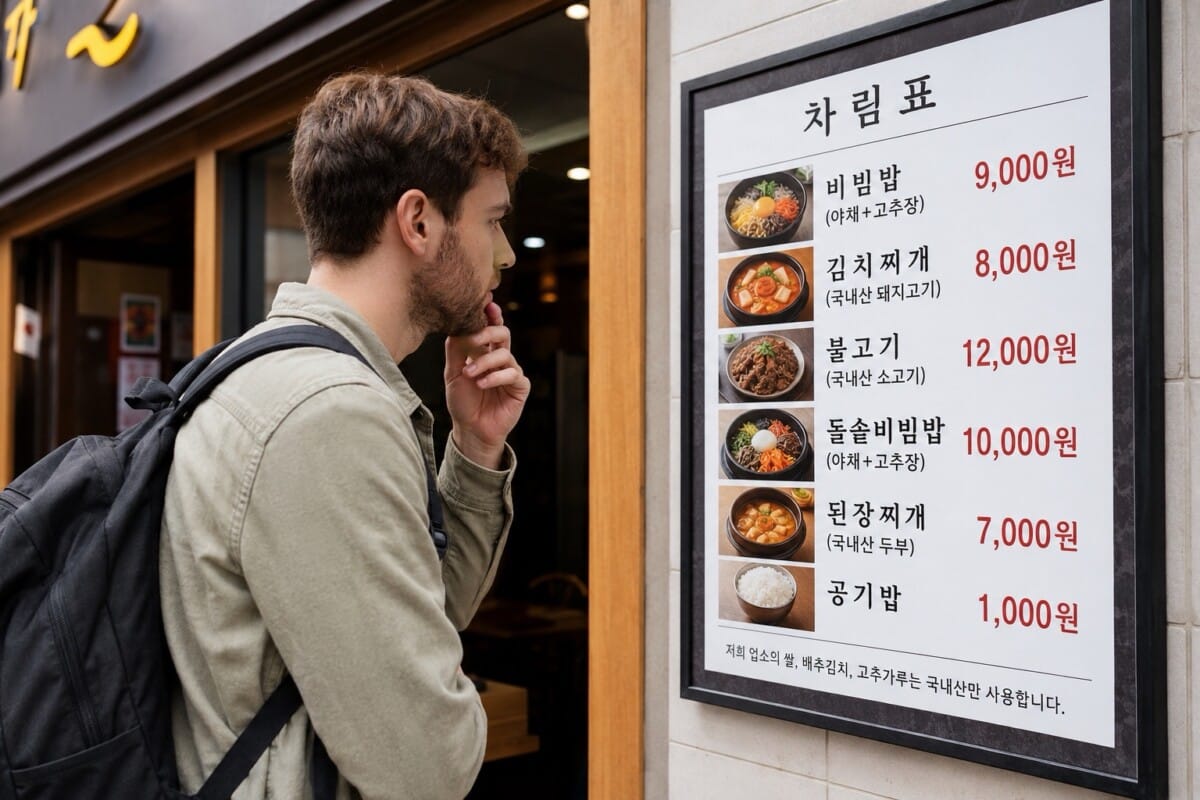
Restaurants, Markets and Shopping: Confirm the Price First
For restaurants, markets, cosmetics shops, and other tourist purchases, the practical rule is the same: do not commit to an unclear price. Seoul has previously carried out price-label checks and anti-overcharging measures in major tourist shopping areas, including Myeongdong.
- Restaurants: confirm the price of the exact dish, set, size, or portion you are ordering.
- Markets: if the price depends on weight or quantity, ask for the total or calculation before the item is prepared.
- Shopping: compare the shelf or displayed price with the amount at checkout.
- Optional services: ask whether any extra service is included in the quoted amount or charged separately.
If the seller clearly explains a higher price before you agree, you can decide whether it is worth paying. The more serious problem is a material price change after the agreement, an unexplained extra charge, or pressure to pay an amount that does not match what was shown.
What to Do If the Price Changes at Checkout
If the amount suddenly changes, stay focused on the numbers rather than arguing about whether the business is a “scam.” A calm, documented dispute is easier to explain to a complaint center.
- Ask for an itemized explanation. Point to the menu, label, app estimate, or original quoted price.
- Ask for a receipt. Keep both the merchant receipt and card record if available.
- Save evidence before leaving. Take photos of the price display and note the business name, location, time, and amount.
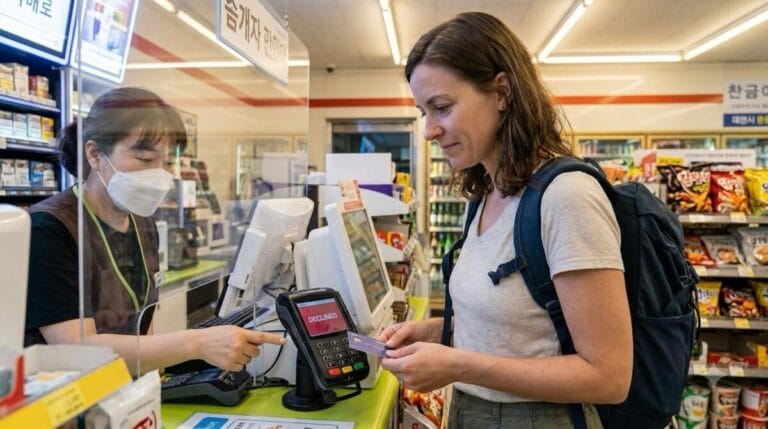
- Do not pay a second time without checking. If someone says the first payment failed, confirm your banking app or receipt before retrying when possible.
- Get language help. 1330 provides tourism information, interpretation support, and tourist complaint services.
How to Report Overcharging in Korea
For general tourist complaints anywhere in Korea: the Korea Tourism Organization operates the 1330 Korea Travel Helpline & Complaint Center. Travelers can use telephone and real-time chat services, and tourist complaints can be submitted through the official Tourist Complaint Center.
For taxi problems in Seoul: Seoul provides a multilingual taxi QR complaint system for issues including overcharging, not using the meter, and passenger refusal. The city also directs passengers to the 120 Dasan Call Center for taxi service complaints.
For price gouging and tourism-service complaints in Seoul: the Seoul Tourist Complaint Center lists overcharging and other tourism-related inconveniences among the problems it handles.
If you are threatened, trapped, or believe a crime is happening: call 112 for police. This is different from a normal price disagreement and should be treated as a safety issue.
What Evidence to Keep
You do not need to build a legal case on the spot, but a few details can make an official complaint much easier to understand.
- Receipt, card slip, or banking transaction record.
- Photo of the menu, price tag, quotation, or fare estimate.
- Business name and location.
- Date and approximate time.
- Taxi license plate and app ride record, if relevant.
- A short note explaining the price you were shown and the amount you were asked to pay.
For a Seoul taxi complaint through 120, the city specifically notes that the full license plate number is important.
FAQ
Are tourists commonly overcharged in Korea?
There is no reliable nationwide figure showing that ordinary tourists are routinely overcharged. Official Seoul records do show complaints about unfair taxi fares and other tourism-related overcharging, so it is reasonable to take basic precautions without assuming every high price is dishonest.
Is a taxi fare higher than the app estimate automatically an overcharge?
No. An app estimate is not always the final fare. Traffic, tolls, legitimate surcharges, and approved fare plans can change the amount. Compare the meter, toll, surcharge information, receipt, and app record before deciding that the fare is improper.
What should I do if a restaurant charges more than the menu price?
Ask for an itemized explanation and keep a photo of the menu and the receipt. If the difference cannot be explained or resolved, you can contact the 1330 Korea Travel Helpline / Tourist Complaint Center.
Can I report a Seoul taxi for not using the meter?
Yes. Seoul’s multilingual taxi QR complaint system explicitly accepts reports about overcharging, meter violations, passenger refusal, and other unfair practices.
What number should I call if I need help in English?
For tourism information, interpretation, and tourist complaints, use 1330. For a police emergency or immediate threat, call 112.
Official Sources
- Seoul Metropolitan Government — Taxi Overcharging Enforcement and Receipt Improvements (2026)
- Seoul Metropolitan Government — Taxi Fares, Surcharges and Complaint Information
- Seoul Metropolitan Government — Taxi QR Complaint System
- VISITKOREA — 1330 Travel Helpline & Complaint Center
- Visit Seoul — Seoul Tourist Complaint Center and Price Gouging Reports
- Seoul Metropolitan Government — Measures Against Forced Purchases and Overcharging
The simple version: avoid getting overcharged in Korea by checking the total before you agree, keeping the receipt, separating legitimate taxi tolls and surcharges from the meter fare, and using 1330 or the relevant Seoul complaint channel when the numbers do not match.
Travel information can change, especially taxi fares, surcharges, service hours, and complaint procedures. Double-check anything important before relying on it during your trip.