KOREA ESSENTIALS · 6-DAY ITINERARY
6 Days in Korea: Seoul Only or Add Busan or Jeju?
First Korea Trip · Updated October 1, 2026
Last fact-checked: September 7, 2026 · How we verify travel information
A six-day Korea trip is not really a question of how many places can fit on a map. It is a question of how much of those six days you are willing to spend moving.
Seoul only is the least rushed version. Seoul plus Busan can work if a second city is important enough to justify one hotel change. Seoul plus Jeju can work too, but the airport process and island distances take more out of the schedule than the short flight suggests.
The useful way to decide is to count usable sightseeing time and the cost of each transfer, not just the number of destinations you can technically touch.
Start by Counting Usable Days, Not Calendar Dates
If you land at Incheon in the afternoon on Day 1 and fly home on Day 6, you do not have six full sightseeing days. Arrival includes immigration, baggage and the trip into Seoul. Departure can pull you out of the city hours before takeoff.
That often leaves something closer to four full days plus two partial ones. In that version of the trip, one intercity move matters much more than it looks on a timetable.
Before adding another destination, count hotel nights and ask how many mornings you actually wake up with a full day ahead of you. If you need to plan the first airport transfer, see Incheon Airport to Seoul: AREX, Bus or Taxi?.
Every Extra Destination Charges a Transfer Tax
The cost is not just the train ride or flight.
A move from Seoul to somewhere else usually means packing, checking out, getting to a station or airport, waiting, traveling, finding the next hotel, dropping luggage and getting oriented again. None of those steps is individually difficult. Together, they take a noticeable bite out of a six-day trip.
That is why a fast train can still consume most of a sightseeing day, and why a one-hour flight can create several hours of travel overhead.
The key question is not “Can I fit Busan or Jeju?” It is “Is that destination worth the transfer tax to me?”
Seoul Only: What You Gain by Not Moving

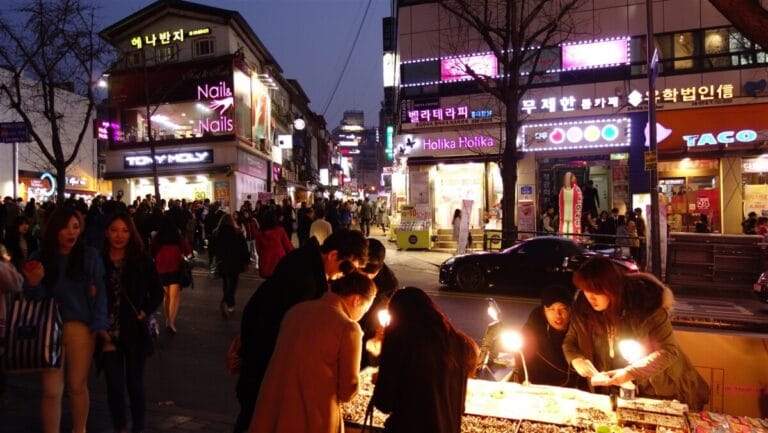
Six days in Seoul is not six days of the same city experience. A palace morning, an afternoon in Seongsu, a late night in Hongdae, a market stop, a museum, the Han River and a slower café day do not feel like repetitions of one another.
The biggest advantage is not the number of attractions. It is slack.
If jet lag wrecks the first morning, you can move a neighborhood to another day. If rain ruins a view, you can switch to shopping or a museum. If you find a district you like, you do not have to leave because the next hotel is already booked.
One hotel also removes a surprising amount of friction: no repacking, no luggage storage between rooms, no second check-in and no time spent learning a new base halfway through the trip.
If you are still choosing that base, compare Hongdae, Myeongdong and Gangnam.
What you give up
You do not get Korea’s southern coast, a second-city contrast or Jeju’s island landscape. If one of those is a major reason for the trip, staying only in Seoul can feel too narrow even when the schedule itself works well.
Add Busan When a Second City Is Worth One Hotel Change
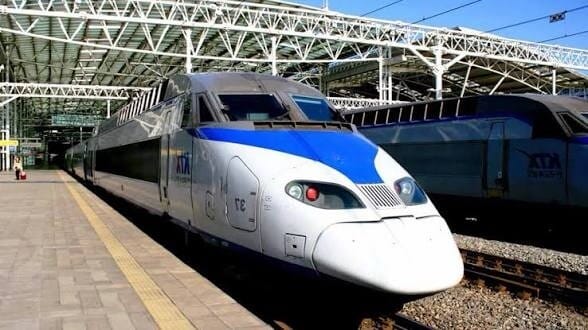
Busan is the easier add-on when you want two destinations in six days. Seoul and Busan are connected by direct high-speed rail, so the move avoids the airport process.
That does not make it invisible. You still need to leave your hotel, reach the station, ride south, get from Busan Station to your accommodation and check in. The move affects a large part of the day even if the train itself is fast.
If Busan is included, two nights is a much stronger plan than one. One night turns the city into a stopover. Two nights at least gives you an arrival afternoon or evening plus one full day.
For the rail leg, use the official system and check the exact service you plan to take. See How to Book KTX Tickets as a Foreigner in Korea.
Busan earns its place when
- you actively want a second Korean city, not just another pin on the map;
- coastal scenery and Busan neighborhoods are high on your list;
- you are comfortable changing hotels once;
- you can give Busan two nights without turning Seoul into a rushed stopover.
Add Jeju Only When Jeju Is One of the Reasons for the Trip
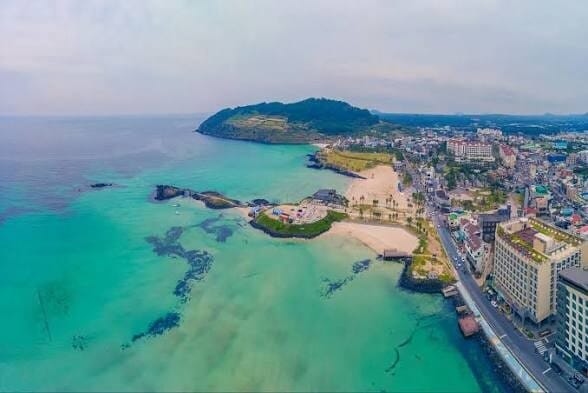
Jeju is the option most likely to look easier than it feels.
Most Seoul–Jeju domestic trips use Gimpo International Airport. The flight itself is short, but the day includes the trip to the airport, check-in and security, the flight, baggage if needed, then another trip from Jeju Airport to wherever you are staying.
Once you arrive, the island adds another planning layer. Jeju’s sights are spread out. Current VisitKorea guidance gives examples from Jeju Airport ranging from about 20 minutes by bus to Dongmun Market to around 60 minutes for Hamdeok Beach or Hallasan National Park, with some farther destinations taking longer.
The official 2026 notice cited in this guide described a temporary direct Incheon–Jeju service that ran only through August 7. Do not assume a direct Incheon connection for your dates; check the current flight schedule instead.
If your international flight uses Incheon while the Jeju flight uses Gimpo, treat those as two separate airport movements. Incheon Airport’s FAQ says nonstop train or bus travel between Incheon and Gimpo takes about 30–40 minutes before adding terminal, check-in or security time.
Jeju earns its place when
- the island itself is a priority destination;
- landscapes matter more to you than maximizing time in Seoul;
- you are comfortable adding a domestic flight;
- you already have a realistic plan for moving around the island.
If Jeju is only a “maybe, since we are already in Korea,” it is the easiest destination to save for a longer trip.
A Six-Day Korea Trip Has Three Sensible Shapes
1. One base: Seoul only
Best when the six days include arrival and departure, you dislike hotel changes, or this is your first trip and you want room for neighborhoods, food, shopping, nightlife and an optional day trip.
2. One move: Seoul + Busan
Best when seeing two very different big-city environments matters enough to spend part of one day moving. The trip stays fairly straightforward because rail connects the cities directly.
3. One flight: Seoul + Jeju
Best when Jeju is non-negotiable. The island gives you something Seoul cannot, but it asks for the most transfer planning of the three options.
What usually does not make sense is Seoul + Busan + Jeju in the same six days. It is possible, but the trip becomes a chain of checkouts, stations, airports and new hotels. That is fine if rapid sampling is the goal; it should not be the default first-trip plan.
One Decision Rule That Makes This Easier
Imagine removing the second destination from your plan.
If the trip suddenly feels incomplete, keep the second destination. If the trip mostly feels easier, stay in Seoul.
That is the cleanest way to separate a real priority from itinerary FOMO.
For most undecided first-time visitors, Seoul only is the safer use of six days. Busan is the easier add-on. Jeju is the right add-on when you already know why you want Jeju.
Official Sources
- KORAIL — official train information and booking
- Korea Tourism Organization — Airport Transportation Guide
- Korea Tourism Organization — Jeju International Airport and getting around Jeju
- Korea Tourism Organization — 2026 Incheon–Jeju temporary direct-flight notice
- Incheon International Airport — Incheon/Gimpo airport connection FAQ
Train schedules, flight routes and airport procedures can change. Check the exact services for your travel dates before building a tight connection.