KOREA ESSENTIALS · SOLO DINING
Solo Dining in Seoul: What You Can Eat Alone (and What Gets Tricky)
First Korea Trip · Updated October 1, 2026
Last fact-checked: August 30, 2026 · How we verify travel information
Eating alone in Seoul is usually easy. The part that trips people up is not being alone. It is choosing a restaurant whose food is built for one person.
A bowl of noodles, bibimbap or gukbap is naturally a one-person meal. Korean barbecue, dakgalbi, jeongol and other table-cooked dishes may be sold by serving count or designed around a shared pan. That is why the useful question is not “Can I eat alone in Korea?” but “Does this place sell meals to individuals or food to tables?”
The One Rule: Look at the Serving Format
Seoul’s official tourism guide has a dedicated section on eating and drinking alone, so being a solo diner is not unusual in itself. The complication is how the menu is structured.
If one price gets you one bowl, one plate or one tray, you are usually in easy territory. If the menu revolves around a grill, a large pan, a hot pot, meat sold by serving count or dishes labeled small/medium/large, check before sitting down.
A restaurant can be perfectly comfortable with solo customers and still have one menu that starts at two servings. Those are two different rules.
The Easiest Korean Meals for One
One bowl, one plate, one tray
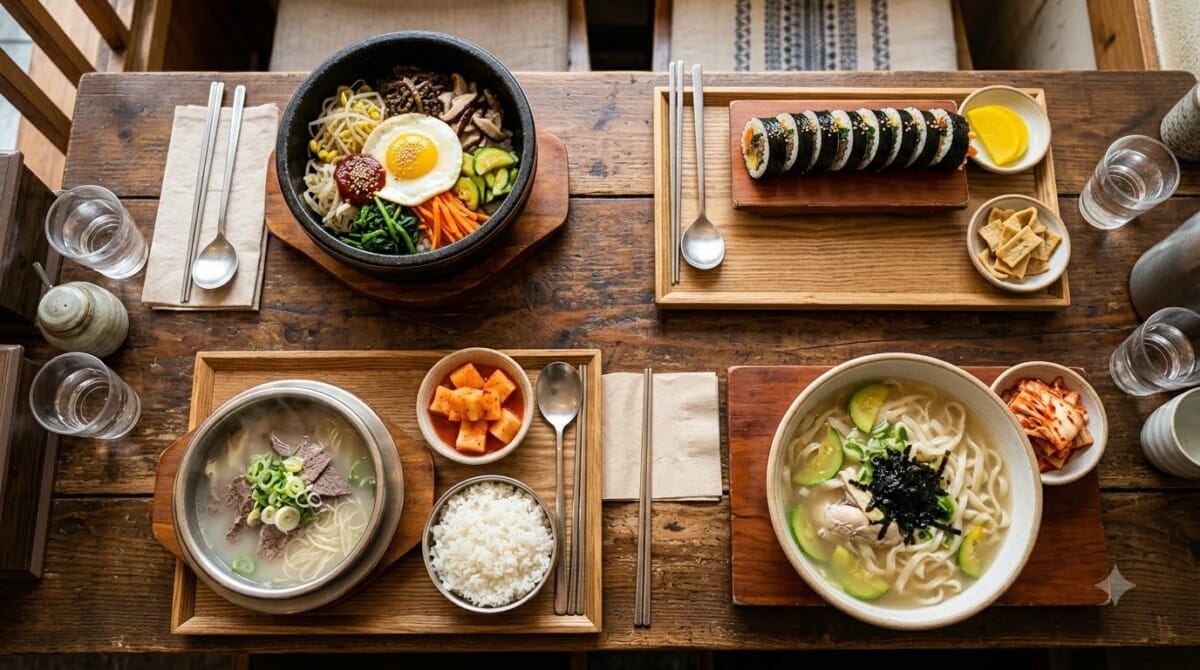
Bibimbap, deopbap, gukbap, gomtang, seolleongtang, noodles, gimbap and many casual set meals are straightforward because the serving format already assumes one diner.
Noodle shops are especially easy. Kalguksu, naengmyeon, ramyeon and similar dishes usually arrive as individual portions, so there is no shared grill or central pot to negotiate.
Casual food works well because the order is obvious
Gimbap shops and bunsik restaurants are useful when you want something quick without researching the restaurant first. The main exception is table-cooked food such as some versions of jeukseok tteokbokki, which can be sold in sets for multiple people.
What Gets Tricky Is Shared-Format Food
The hard category is not Korean food. It is food designed for the table.
Barbecue, dakgalbi, jeongol, hot pots, bossam, jokbal, jjimdak and large platters can all be possible alone, but the order may start at two servings or a size intended for several people.
Do not assume that “small” means “for one,” and do not assume that a menu price marked “1 serving” guarantees that the restaurant will accept a one-person party with only one serving.
Korean BBQ Alone: Check Two Separate Things
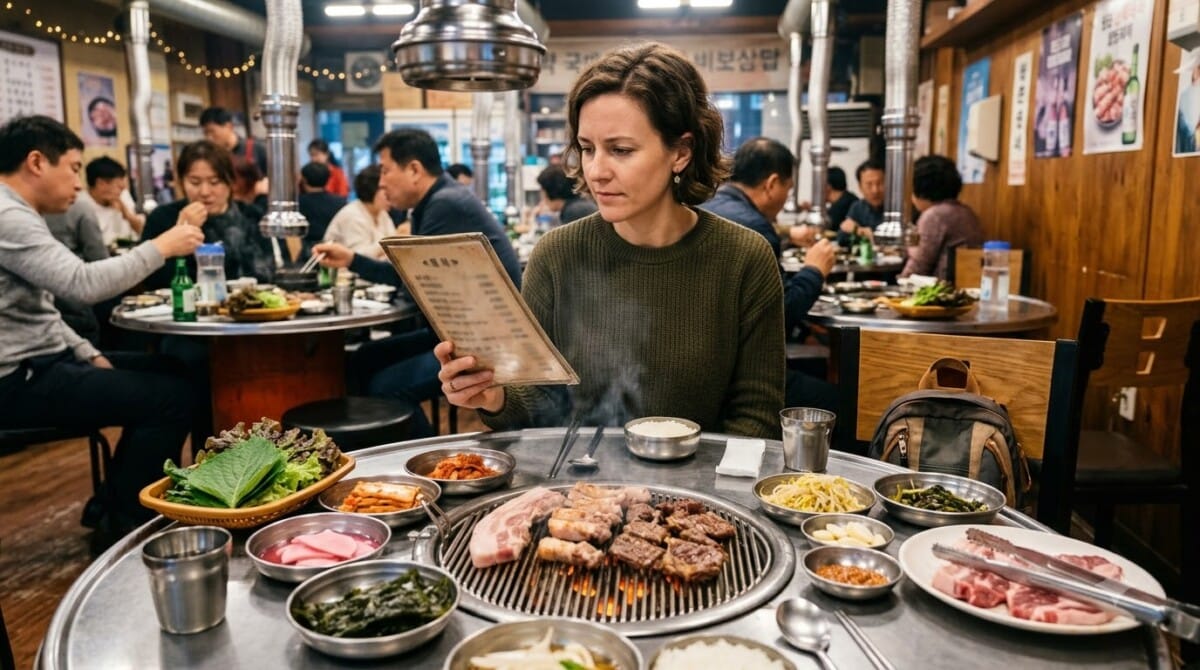
Korean BBQ is where solo travelers most often need to check before walking in.
- Minimum food order: does the menu require two or more servings of meat?
- Minimum party size: will the restaurant seat one diner at all?
A restaurant may accept one person who orders two servings. Another may require two diners regardless of how much one person is willing to order. Solo-specific barbecue places with individual grills are another option, but branch policies can change.
That is why checking a recent menu or review is more useful than relying on a generic claim that “Korean BBQ is impossible alone” or “Korean BBQ is always fine alone.”
Read the Menu Before You Sit Down
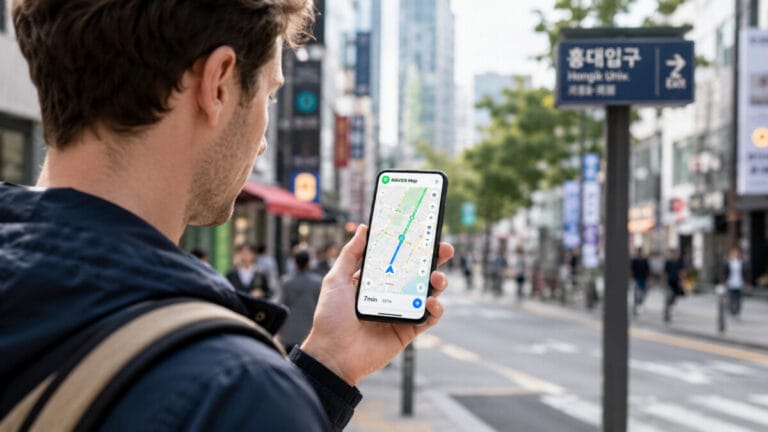
NAVER Map is useful here because place pages may show current menu photos, prices and recent reviews. If you are not familiar with the app, see our NAVER Map guide for tourists.
The most useful Korean clues are serving count and minimum-order language. Look for 1인분, 2인분, 2인분 이상, 2인 이상 and 최소 주문. Reviews containing 혼자 or 혼밥 can also tell you whether recent solo diners had trouble.
A simple visual test works too: does the menu sell complete meals to people, or large dishes to tables? That distinction is more useful than the restaurant category.
Useful Korean Phrases for Solo Dining
| Korean | Meaning |
|---|---|
| 한 명이에요. | One person. |
| 혼자인데 식사 가능해요? | I’m alone. Can I eat here? |
| 1인분 주문 가능해요? | Can I order one serving? |
| 2인분부터 주문해야 해요? | Do I have to order at least two servings? |
| 2인분 주문하면 혼자 먹어도 돼요? | If I order two servings, can I eat here alone? |
The last question is especially useful at barbecue restaurants because it separates the amount of food from the number of diners.
Have a Backup, Not a Battle Plan
If a restaurant will not seat one person, choose another restaurant. It does not mean Seoul is hostile to solo dining; it means that particular table setup or menu does not fit.
This matters most when one famous restaurant has become the center of your evening. Save one nearby alternative, especially for barbecue or shared dishes. Flexibility usually produces a better dinner than arguing with a minimum-order policy.
For more examples of actual restaurants and what travelers reported after eating there, see Seoul Restaurants Foreign Travelers Actually Loved.
And there is no special solo-dining etiquette to perform. Order normally, follow the restaurant’s rules, and do not add a Western-style tip just because you are eating alone. See our tipping guide for the broader rule.
Official Sources
Restaurant menus, minimum orders and seating policies can change. Check the current branch menu or recent reviews when one specific restaurant matters to your plans.