HELP & PROBLEMS · JEJU SAFETY
Is Jeju Safe to Visit in 2026? What Travelers Should Know After the Recent Missing-Person Cases
First Korea Trip · Updated August 31, 2026
Last fact-checked: August 31, 2026
Yes. For most tourists, Jeju remains a reasonable place to visit with normal travel precautions. Current U.S. and Australian government travel advice does not place Jeju under a special warning: the United States rates South Korea Level 1, “Exercise normal precautions,” while Australia advises travelers to exercise normal safety precautions.
The recent Jeju missing-person controversy is serious, but it is mainly about failures in the handling of missing-person reports and the police response. It is not, by itself, evidence that ordinary tourists should avoid the island. For visitors, the more practical risks are usually weather, coastal conditions, hiking, driving, remote locations and staying connected when something goes wrong.
Quick answer
- You do not currently need to cancel a Jeju trip because of the recent missing-person headlines alone.
- Check weather and marine conditions before beaches, coastal walks and boat activities.
- Do not treat Hallasan or remote trails like an easy city walk. Check official trail status before leaving.
- Plan transport before heading to rural or isolated areas, especially if you will return after dark.
- Keep mobile data and battery available so you can navigate, share your location and call for help.
- In an emergency, call 112 for police or 119 for fire and rescue. The 1330 Korea Travel Hotline can help with non-life-threatening travel questions and interpretation.
Jeju Safety Quick Facts
| Question | What travelers should know |
|---|---|
| Current U.S. travel advisory | South Korea: Level 1 — Exercise normal precautions |
| Current Australian advice | Exercise normal safety precautions in South Korea |
| Police emergency | 112 |
| Fire / rescue emergency | 119 |
| Tourist help | 1330 Korea Travel Hotline |
| Jeju tourist information | +82-64-740-6000, with English support during operating hours |
| Major seasonal issue | Heavy rain can occur in summer; typhoon season can extend from May to November |
| Best safety habit | Check weather, route and return transport before going somewhere remote |
In this guide
Why Are Travelers Asking Whether Jeju Is Safe?
In August 2026, Jeju police came under national scrutiny after a police officer was accused of prematurely closing missing-person cases without properly confirming the missing people were safe. The Jeju police chief publicly apologized, and the controversy led to wider reviews of how missing-person cases are closed.
The latest reporting also shows why it is important not to turn the story into a simple “Jeju is dangerous” narrative. In the most closely watched case, investigators said on August 31 that the exact cause of death remained unknown and that they were keeping possibilities open. The major confirmed issue is the handling of the report and the police process.
For a traveler deciding whether to go, the more useful question is not “Did something serious happen in Jeju?” It did. The useful question is: has Jeju been placed under a higher travel warning or is there a new official recommendation to avoid the island? At the time of this fact-check, the answer is no.
The Safety Risks Tourists Are More Likely to Face in Jeju
Jeju is different from spending a few days in central Seoul. Attractions are spread across an island with mountains, coastlines, rural roads and places where weather can change your plans quickly. That makes basic trip planning a safety issue, not just a convenience.
1. Coastal conditions can change quickly
VisitJeju’s 2026 summer guidance tells visitors to change swimming plans when strong winds, swells or heavy rain are forecast, to use designated swimming areas and to check whether safety personnel are on duty. It also specifically warns against swimming or diving in ports.
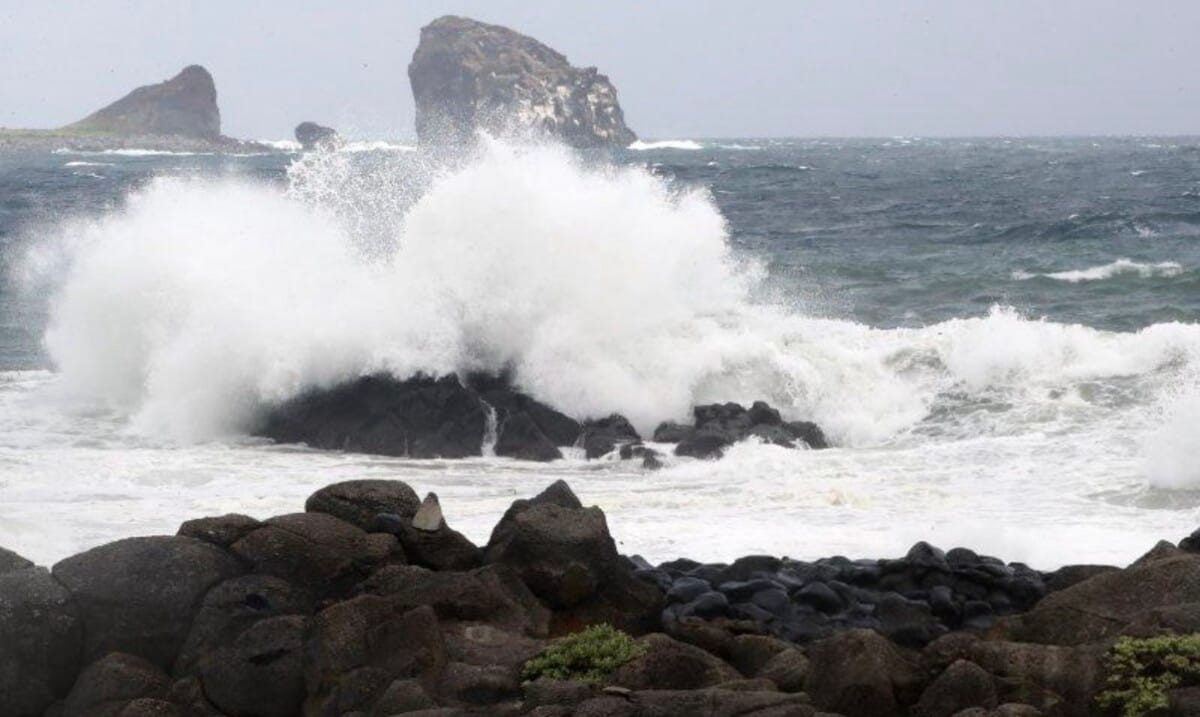
Do not assume a beautiful rocky coast is a safe swimming spot. Some coastal areas can also be closed because of falling-rock or access risks. If there is a barrier or closure sign, do not cross it for a photograph or shortcut.
2. Weather matters more than it may look on the map
The U.S. State Department notes that heavy rain and flooding may occur during the June–August monsoon season and that typhoon season can run from May through November. Australia also warns of extreme heat and heatwaves between June and September.
If a day includes a ferry, beach, mountain hike or long drive across the island, check the forecast again that morning. A schedule that looks fine the night before may need to change.
3. Hallasan is a real mountain, not just another attraction
Hallasan National Park tells hikers to check real-time trail information and weather before hiking. The park also advises visitors to prepare water, rain gear, snacks and basic hiking equipment because there are no shops on the trails. Its official safety notice recommends avoiding solo summit hikes where possible because the routes are long and fatigue can become a safety problem on the descent.
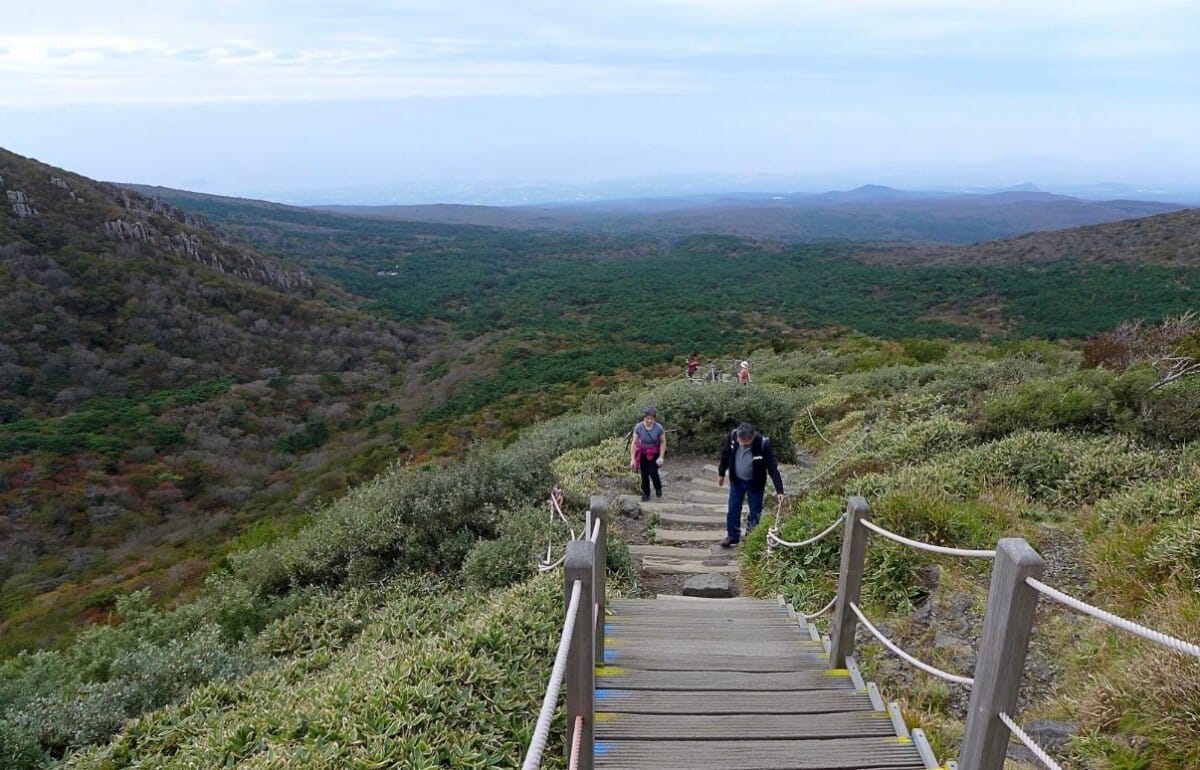
Do not build a Hallasan day around a fixed sightseeing schedule without checking the official status first. Trail access, weather and operating rules can change.
4. Driving deserves more attention than many first-time visitors expect
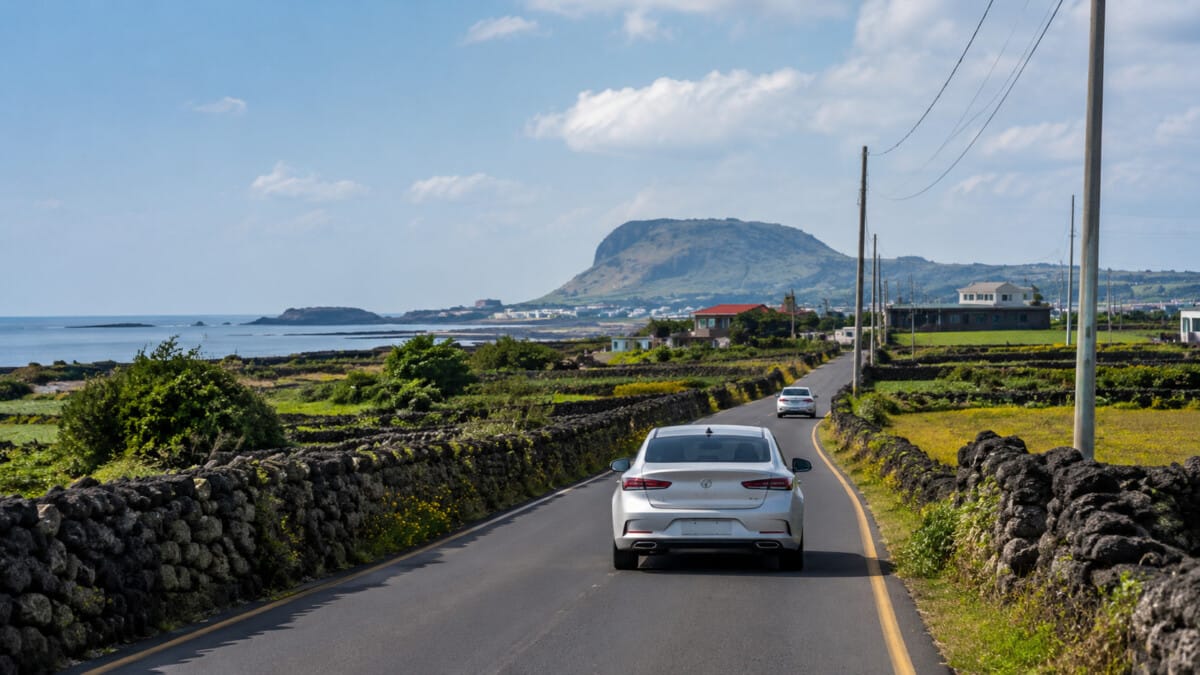
A rental car can make Jeju much easier to explore, but unfamiliar roads, rain, darkness and long sightseeing days can increase fatigue. Give yourself more time than the navigation estimate, avoid rushing between opposite sides of the island and do not drive when you are too tired after a hike.
If the weather becomes poor, changing the itinerary is usually a better decision than trying to “complete” every planned stop.
Is Jeju Safe for Solo Travelers?
For most solo travelers, Jeju can be visited with the same basic precautions you would use elsewhere in South Korea. The main difference is that being alone matters more when you are hiking, walking along a remote coast or returning from a rural attraction after dark.
- Tell someone where you are going before a long hike or remote coastal walk.
- Share your live location when doing an activity where you may be alone for hours.
- Save your accommodation name and address in Korean as well as English.
- Do not let your phone battery fall close to zero before the return journey.
- If a location feels too isolated to reach or leave comfortably, change the plan before it becomes a problem.
- Use normal nightlife precautions around alcohol, strangers and late-night transportation.
The same advice applies to solo female travelers, with extra attention to late-night movement and isolated locations. Current government travel advice for South Korea still remains at the normal-precaution level, but normal precautions still matter.
Plan Your Route Before Going Somewhere Remote
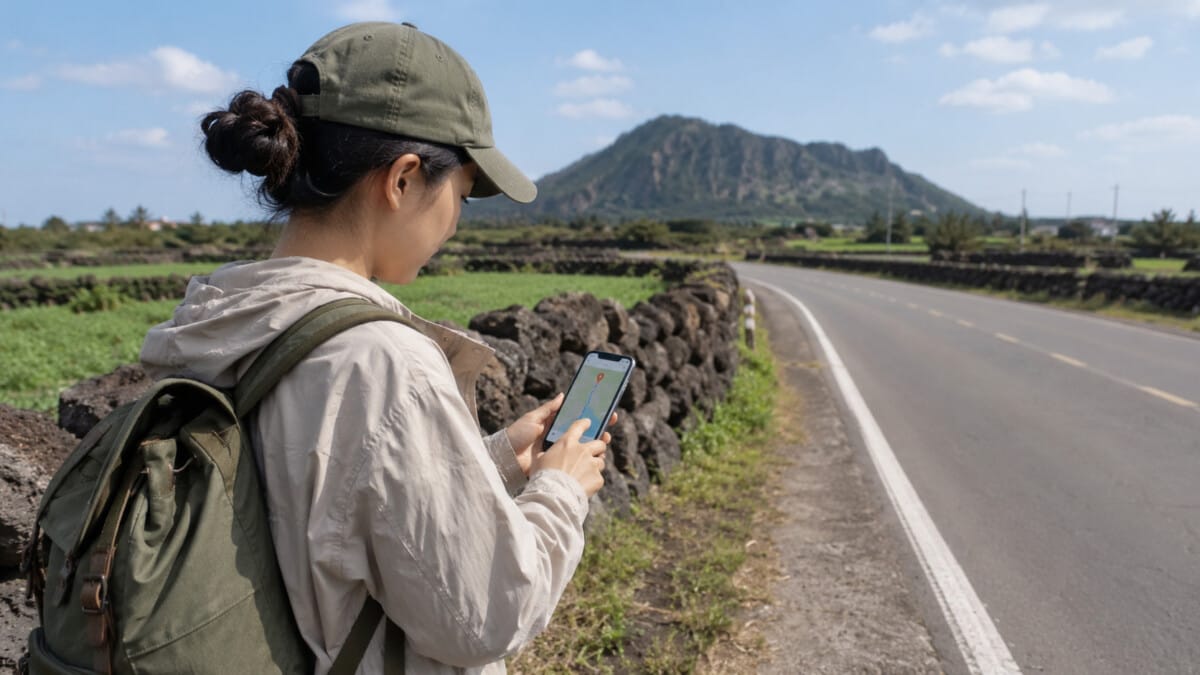
In Seoul, changing plans at the last minute is often easy because another subway train or bus is usually nearby. Jeju rewards more preparation. Before leaving for a trail, beach, oreum or rural café, check how you will get there and how you will leave.
- Check the last practical bus or return option before you arrive.
- Save the destination in Korean if the English name produces uncertain search results.
- Do not rely on walking directions that send you along an uncomfortable rural road after dark.
- If using taxis, keep enough battery and mobile data to request another ride later.
For route planning, see How to Use NAVER Map in Korea: A Tourist Guide in English. It is worth learning the basic search and navigation workflow before your first rural Jeju day.
Keep Your Phone Working: It Is Part of Your Safety Setup
Your phone is your map, translation tool, taxi access, weather check, accommodation record and fastest way to contact help. On Jeju, that becomes more important once you leave the main urban areas.
- Start long days with a charged phone.
- Carry a power bank if you will be outdoors for many hours.
- Keep your hotel address saved offline or as a screenshot.
- Download or save key route information before a long hike.
- Know whether your mobile setup allows ordinary Korean phone calls or only data.
If you are still choosing connectivity, read Do You Need a Korean Phone Number? Korea eSIM vs SIM Card Explained. A data-only eSIM is enough for many travelers, but understanding its limits before an emergency is better than discovering them during one.
If you plan to use local buses, it may also help to review How to Use a T-money Card in Korea: A Tourist Guide before leaving Seoul.
What to Do in an Emergency in Jeju
Police: 112
Call 112 to report a crime or when you need police assistance.
Fire and rescue: 119
Call 119 for fire, rescue and urgent emergency assistance.
Tourist help: 1330
The Korea Tourism Organization’s 1330 Korea Travel Hotline can help with non-life-threatening travel questions and interpretation. It is useful when the problem is serious enough that you need assistance but not a reason to delay an emergency call to 112 or 119.
Jeju Tourist Information Center
The Jeju Tourism Organization operates a tourist information center at +82-64-740-6000, with English, Chinese and Japanese phone support during operating hours. The center says it can also connect travelers with emergency services when required.
If you need to explain where you are, open your map and give the nearest named place, road, attraction or visible landmark. A screenshot of your current location can also help when language becomes a problem.
Should You Cancel a Jeju Trip Because of the Recent News?
Based on the current official travel advice, the recent missing-person controversy alone is not a reason for most tourists to cancel a Jeju trip. There is no separate U.S. or Australian warning telling travelers to avoid Jeju at the time of this fact-check.
That does not mean every Jeju trip should proceed regardless of conditions. A typhoon, severe weather warning, trail closure, ferry cancellation or another live safety issue can matter much more to your actual trip than the island’s general safety reputation.
The practical rule is simple: keep the trip unless current conditions give you a specific reason to change it, and recheck official weather, transport and attraction information close to the day you travel.
FAQ
Is Jeju safe to visit in 2026?
Yes, for most tourists. Current U.S. and Australian government advice still places South Korea at the normal-precaution level, with no separate warning to avoid Jeju.
Should I cancel my Jeju trip because of the recent missing-person cases?
Not on the basis of those headlines alone. The controversy concerns serious failures in the handling of missing-person reports, but current official travel advice does not tell tourists to avoid Jeju. Check live weather and transport conditions before making the final decision.
Is Jeju safe for solo female travelers?
Jeju can be visited solo, including by women, with normal precautions. Be more conservative around isolated locations, late-night transport, long hikes and situations where nobody knows your route.
Is Jeju safe at night?
Normal precautions still apply. The bigger planning issue is often transportation and isolation rather than a specific island-wide night danger. Know how you will return before spending the evening somewhere remote.
What should I watch out for at Jeju beaches?
Check weather, strong-wind, swell and heavy-rain conditions. Use designated swimming areas, follow local safety staff and never cross a closure barrier. VisitJeju specifically advises against swimming or diving in ports.
Is it safe to hike Hallasan alone?
The official Hallasan National Park guidance recommends avoiding solo summit hiking where possible because of the route length, fatigue and potential safety issues. Check real-time trail status and weather before starting.
What emergency numbers should tourists save?
Save 112 for police, 119 for fire and rescue, and 1330 for the Korea Travel Hotline. For Jeju-specific tourist information, you can also save +82-64-740-6000.
Official Sources
- U.S. Department of State — South Korea Travel Advisory
- Australian Government Smartraveller — South Korea Travel Advice
- Korea Tourism Organization — Emergency Contacts and 1330
- Jeju Tourism Organization — Jeju Tourist Information Center
- VisitJeju — 2026 Summer Beach and Safety Information
- Jeju Special Self-Governing Province — Hallasan National Park
Recent case context: Yonhap News Agency, August 31, 2026, and Yonhap News Agency, August 27, 2026.
✓ The simple version
Jeju is still a reasonable destination for most tourists in 2026. The recent missing-person controversy is serious, but the confirmed issue is primarily how cases were handled, not a new official warning that tourists should avoid the island. Spend less time worrying about headlines and more time checking the things that can directly affect your day: weather, coastal conditions, trail status, driving, return transport and whether your phone will still work when you need it.
Travel information can change. This guide was fact-checked on August 31, 2026. Recheck government travel advice, local weather, marine conditions, Hallasan trail status and transportation information before activities that depend on current conditions.