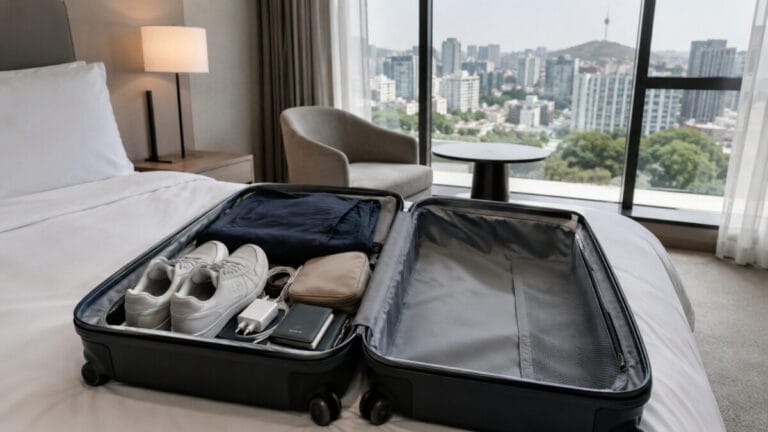
KOREA ESSENTIALS · SEOUL NIGHTLIFE
From First Round to First Train: Inside a Night Out in Seoul
First Korea Trip · Updated October 1, 2026
Last fact-checked: September 8, 2026 · How we verify travel information
If your picture of Seoul nightlife is one club in Hongdae or Gangnam, that is only one version of the night.
A more Korean-style night often moves. Dinner and drinks. Another bar. Maybe noraebang. Maybe a pub or club. Then someone decides they are hungry again at 2 or 3 in the morning. By that point the last subway may be long gone, and the question is whether you are taking a taxi, finding a night bus, or staying out until trains start running again.
That still does not describe everyone. Who you are with changes the night. So does your age, the neighborhood, whether anyone is dating, and whether someone in the group has a spouse waiting at home.
I am in my 30s now, and the way my friends go out is already different from how we did it in our early 20s. This is not a rulebook for every Korean. It is what a night out has looked like in my own circles in Seoul, plus the practical things I would tell a visitor joining one for the first time.
Before the First Round: Who You Are With Changes the Clock
In my experience, dating and going out with male friends almost feel like two different schedules.
When I was in my early 20s, meeting a girlfriend could start around lunch. Noon was normal. You eat somewhere good, find a café she has probably researched better than you have, walk around, then let the day turn into evening. Hongdae, Hapjeong, Itaewon, Haebangchon, Sinsa, Jongno — the neighborhood can be almost anywhere because the day is not built only around drinking.
With male friends, at least in my circles, we were far less interested in spending Saturday afternoon looking for a beautiful café. Four or five in the afternoon made more sense. Meet somewhere busy, find a place for dinner, and start drinking with the meal.
Now that we are in our 30s, things have changed again. Sometimes we meet only for dinner. Sometimes we meet during the day specifically because there is one restaurant we want to try. Some friends are married, which means the night may also have an unofficial deadline negotiated at home.
Your age does not just change how much energy you have. It changes what kind of Seoul nightlife you even want.
1차: The Night Usually Starts With Real Food
One thing visitors sometimes misunderstand is the first round.
It is not necessarily, “Let’s go to a bar and order drinks.” If nobody has eaten, we usually want an actual meal. Korean barbecue works. A restaurant people have been wanting to try works. Anything substantial enough to count as dinner works.
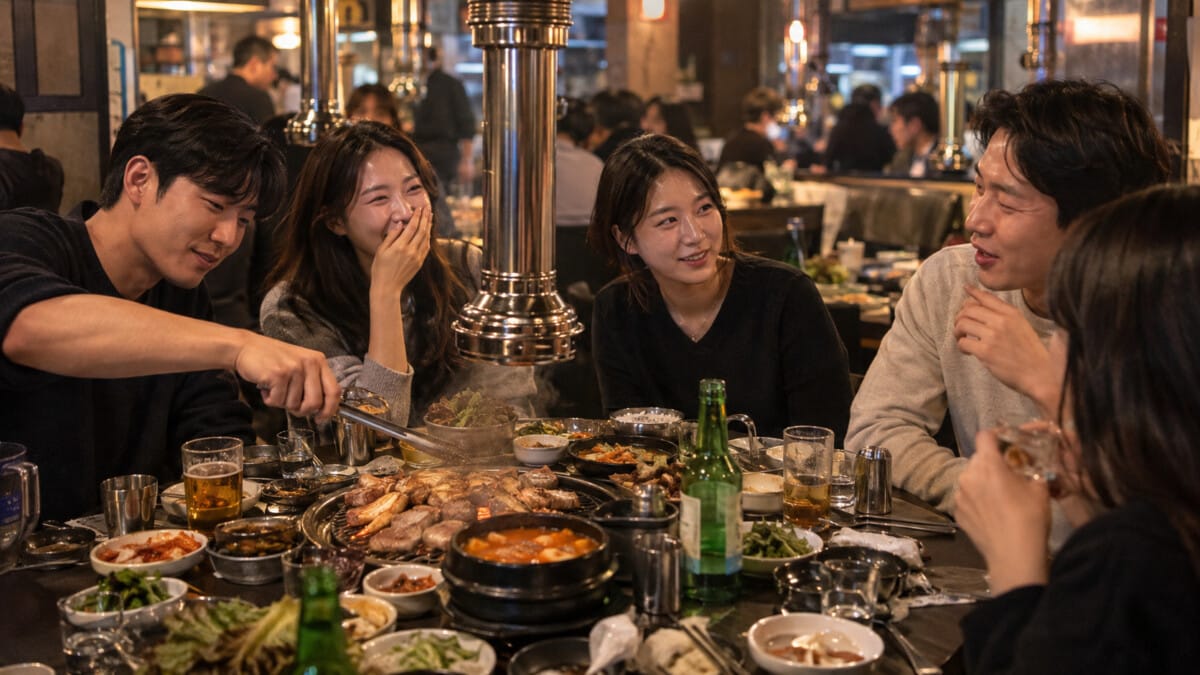
Alcohol is part of the table rather than the whole reason for the table. There is a Korean word, banju (반주), for drinking alongside a meal, and that is close to how the beginning of many nights feels.
You eat properly. A bottle of soju or beer appears. Conversation gets louder. Nobody is in a hurry yet.
Then somebody says, “Where are we going for second round?”
That is when the night changes.
2차, 3차 and Beyond: Why Koreans Keep Moving
Koreans count the stops: 1차, 2차, 3차. Each cha is another round, usually at another venue.
In the most ordinary version I know, it can become:
restaurant or drinking spot → another drinking spot → noraebang → and then… whatever happens next
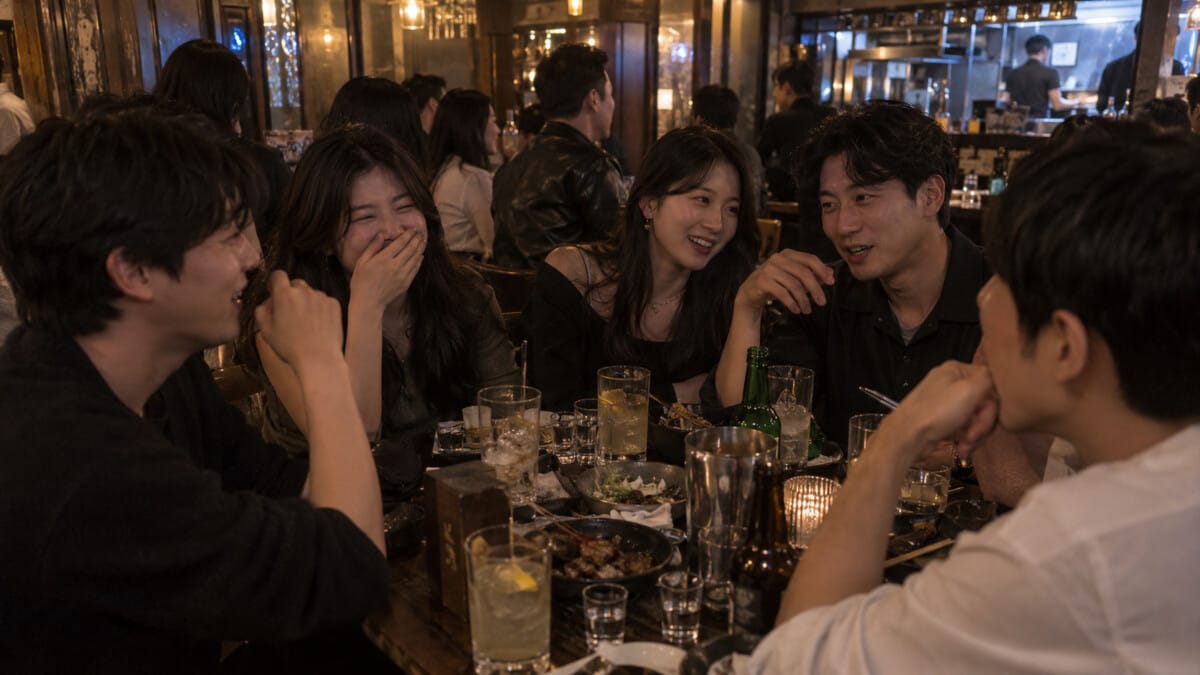
If the group likes clubs or pubs, the route changes:
dinner/drinks → pub or club → another bar → late-night food
Noraebang is especially easy to understand once you experience it. You are not performing in front of a room full of strangers. Your group rents a private singing room, and after two rounds of drinking, people who claimed they were not going to sing suddenly become very committed singers.
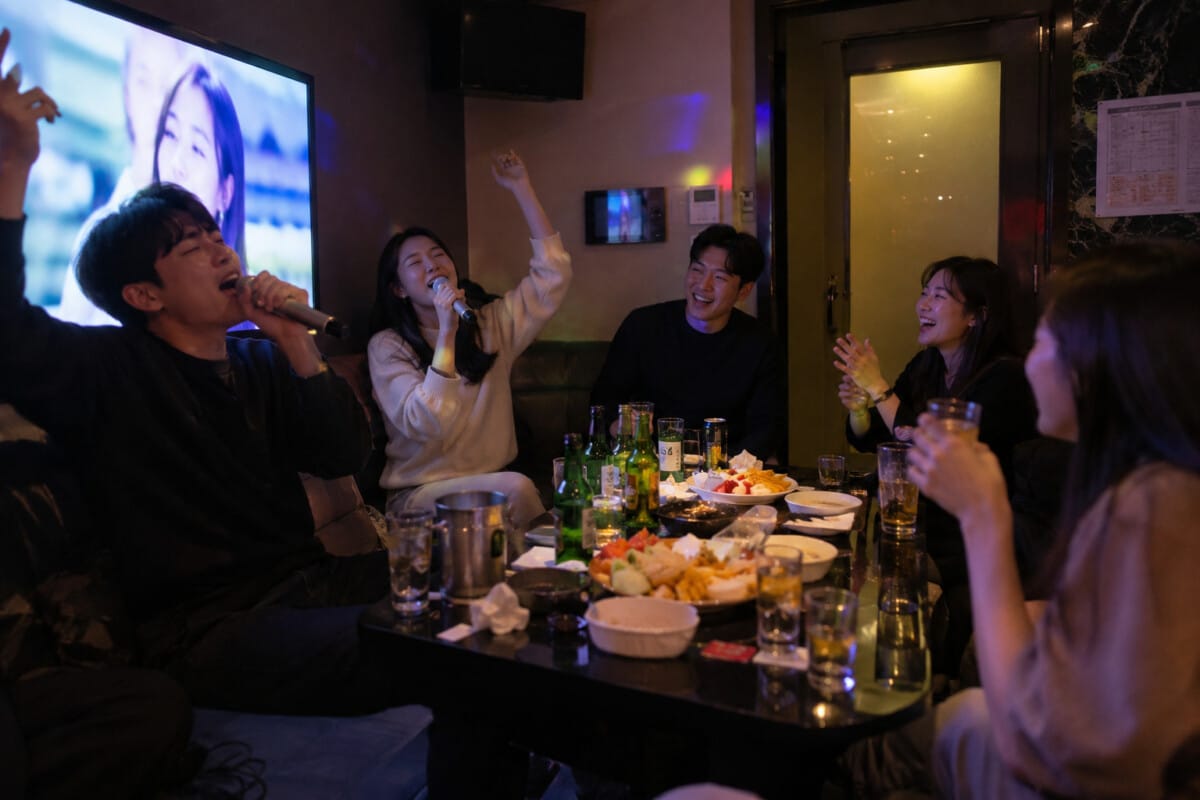
The part I would not copy blindly is the drinking pace. Some Korean friend groups can drink a lot. You do not win anything by matching them drink for drink.
Leaving after the second round is completely fine.
Seoul Nightlife Changes a Lot by Neighborhood
I do not have one answer for “Where do locals go at night?”
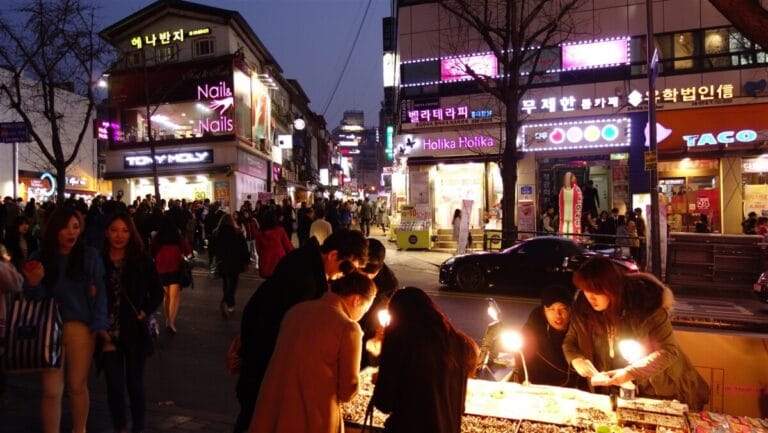
I barely go to Hongdae, Konkuk University or Sillim these days when I am out only with Korean friends. The crowds often feel younger than what I am looking for now. That does not make Hongdae bad. If your goal is to meet a younger crowd, mix with travelers, hear English around you and keep your options open late into the night, Hongdae is still one of the easiest places to do it.
For people around my age, my own shortlist is more likely to include Itaewon, Haebangchon, Apgujeong, Jamsil or Mullae.
- Itaewon: international, easy to move between pubs and bars, and one of the better areas if you want a mixed Korean/foreign crowd.
- Haebangchon: smaller and moodier than Itaewon. Better when I want drinks and conversation rather than a huge night.
- Apgujeong: more polished and style-conscious, with restaurants, bars and places where the night can get expensive quickly if you let it.
- Jamsil: useful when you want a more grown-up night without making the whole evening about clubbing.
- Mullae: still has its own bar-and-industrial-neighborhood character, even though it has changed a lot as more cafés and restaurants have moved in.
Euljiro and Seongsu can be great earlier in the evening, but they are not usually my first choice when the plan is to keep changing venues until very late.
If you are choosing an area mainly by atmosphere, the site’s Seoul Neighborhoods by Vibe: Part 1 and Part 2 go deeper than I will here.
Talking to Strangers Is Possible. It Just Does Not Always Start the Same Way
During the day, Koreans can be extremely helpful to a visitor who needs something. At night, I would describe the friendliness as more selective.
If you are sitting in a pub and nobody talks to you, that does not mean anyone dislikes foreigners. Most people are there with their own group and will leave you alone unless there is a reason to interact.
Eye contact helps. Being in a pub where people stand or move around helps. Speaking even a little Korean helps a lot.
Once people are drinking and the mood is good, a simple conversation can turn into spending the rest of the night together. But Korea is not a place where I would assume strangers will automatically walk over and start chatting just because you are sitting nearby.
Meeting people with romantic intent — what Koreans often call hunting (헌팅) — can also be fairly direct. At a standing pub or club, approaching someone feels natural. At a seated Korean drinking place, people usually read the room more carefully first. Someone looks over. The other side notices. Maybe somebody finally walks over. Maybe they do not.
That small hesitation is very Korean to me.
You Can Join Without Drinking Alcohol
You do not need to drink soju just because everyone else is drinking it.
At a more traditional Korean drinking table, people may pour for one another and raise glasses together. If somebody does not drink, they can still join the toast with soda, water or another drink. I have seen people use a soju glass with a non-alcoholic drink just to stay part of the moment.
Hongdae and Itaewon make this especially easy because the nightlife is more mixed and nobody is surprised by different drinking choices.
The only thing I would not recommend is treating Korean drinking culture like a challenge. In some male friend groups I know, the amount of alcohol on the table can get ridiculous. That is an observation, not a target.
You will also see hangover drinks and supplements in Korean convenience stores, and plenty of Koreans buy them before or after drinking. Treat that as part of the local ritual, not a guarantee. There is no scientifically proven product that simply prevents or cures a hangover; drinking less is still the reliable way to reduce the risk.
The Last Subway Is Sometimes Something You Expect to Miss
When I go out properly, I often do not plan the night around the last subway at all.
That does not mean you should forget transportation. It means you should decide your backup before you start drinking.

Seoul has late-night N buses, and taxis run overnight. Taxi fares have late-night surcharges, and getting a car in a busy nightlife district can still be frustrating. In Itaewon and Hongdae, I have had nights where getting a taxi felt almost impossible. Once in winter, I stood around for close to an hour trying to get one.
Your experience may be completely different on another night. The point is not “taxis are impossible.” The point is do not assume one will appear the second you want to go home.
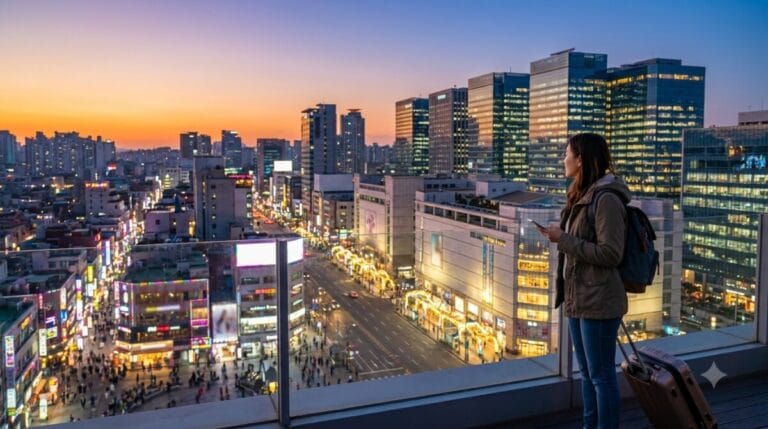
If you already know you are going to stay late, check your route while you are still sober. Know whether an N bus helps. Know roughly where the nearest main road is for taxi pickup. And if you really are staying until trains resume, check the first-train time for your specific station and line rather than relying on one citywide time.
We have a separate guide for what to do after missing the last subway in Seoul, and if you are planning to use an app for the ride home, see Kakao T vs k.ride.
Locals who drove may use a daeri unjeon (대리운전) service, where a hired driver takes both the person and their car home. For most visitors, taxi or night bus is much simpler.
What I Eat at the End of the Night
For me there are basically two answers.
Gukbap, a hot Korean soup with rice, is one. A burger from somewhere that is still open is the other.
That is not a scientific hangover strategy. I just like both.
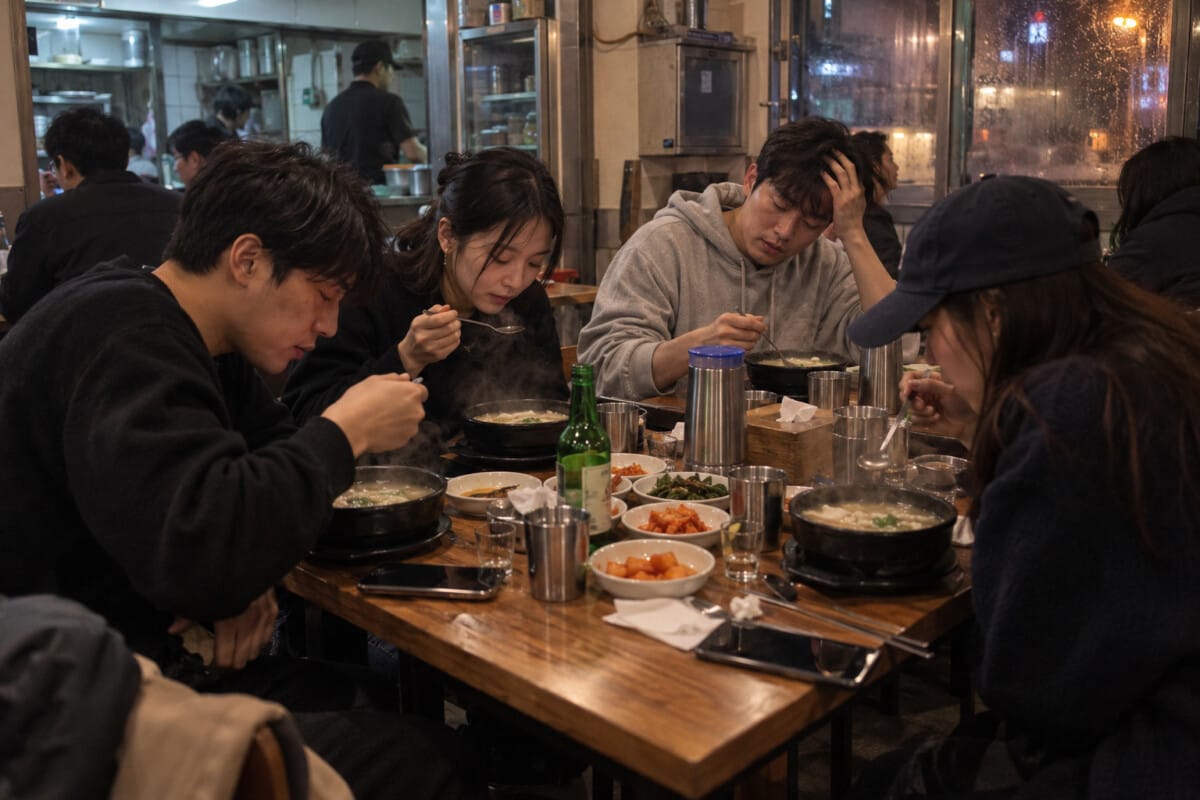
After several rounds of drinking, sitting down with hot soup at 3 or 4 in the morning feels very different from the same meal at lunch. The loud part of the night is over. Everyone is tired. Somebody is checking taxi apps. Somebody else is saying they are definitely fine when they are very obviously not fine.
Then the group starts disappearing one person at a time.
Three Things I Would Tell a Friend Before Their First Seoul Night Out
1. Do not try to keep up just because your Korean friends keep ordering
Eat first, slow down and decide your own limit. Convenience-store hangover products are common, but they are not an insurance policy for the next morning.
2. A little Korean changes the night
You do not need to speak Korean to enjoy Seoul nightlife. But even basic phrases make it easier to joke with people, order, understand what the group is doing next and turn a small interaction into a longer conversation.
After a few drinks, people also tend to become less shy about trying their English.
3. Do not become careless with your drink because Korea feels safe
I would have given softer advice about this years ago. Now I would say the same thing I would tell a friend anywhere: keep track of your drink, do not leave it unattended, and be careful with an already-open drink from someone you do not know.
Seoul authorities have carried out joint enforcement against drug crimes in adult entertainment facilities. That is not a reason to panic about going out. It is a reason not to switch off basic nightlife judgment.
If something genuinely feels wrong or dangerous, 112 is the police emergency number and 119 is fire/ambulance. Korea Tourism Organization’s 1330 Travel Helpline is also available for tourist information and assistance.
Korean Drinking Etiquette: Learn It, But Do Not Perform It Like an Exam
You may have heard about receiving a drink with two hands, supporting one arm with the other, or turning slightly away from an older person when drinking.
Those customs are real. They also depend heavily on age, relationship and how formal the group is.
If you are meeting older Koreans for the first time, using two hands when receiving or pouring a drink is an easy respectful gesture. Among close friends, the atmosphere can be much looser.
As a foreign visitor, I would not spend the entire night worrying about whether your wrist is in the correct position. If somebody cares about the custom, they will usually show you.
And sometimes telling Koreans how people drink in your own country is more interesting than perfectly copying us anyway.
Seoul Has Different Temperatures After Dark
I cannot describe Seoul nightlife with one neighborhood or one kind of night.
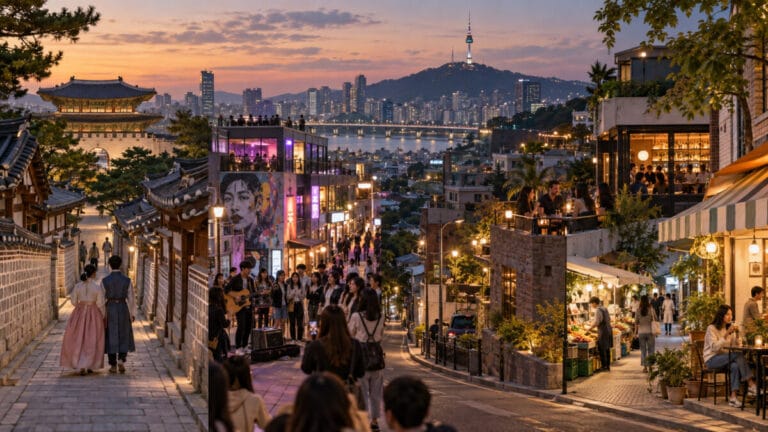
One part of the city is built around expensive food and polished bars. Somewhere else, people in their early 20s are meeting strangers and staying out until sunrise. Another neighborhood is better with coffee, sunlight and people-watching, then feels strangely empty late at night. A street that looks dead in the afternoon can be packed a few hours later.
That is probably the most useful way to think about Seoul after dark.
Do not ask only, “What is the best nightlife area?”
Ask what kind of night you want.
Dinner and conversation. A younger mixed crowd. Clubs. A quiet bar. A long Korean-style series of rounds. Or one drink and home before midnight.
Seoul has all of them. They are just not in the same place.
Official Sources
- Seoul Metropolitan Government — Public Transportation / late-night N bus information
- Seoul Metropolitan Government — Taxi guide and late-night surcharge information
- Korea Tourism Organization — Experience Korean Room Culture / noraebang
- Korea Tourism Organization — Disaster Safety Services for International Visitors
- Seoul Metropolitan Government — Joint enforcement against drug crimes in adult entertainment facilities
- U.S. National Institute on Alcohol Abuse and Alcoholism — Hangovers
Transit schedules, taxi rules, venue hours and nightlife conditions can change. Check current official information for the specific night you go out.