KOREA ESSENTIALS · FALL CLOTHING
What to Wear in Korea in Fall: September, October & November Guide
First Korea Trip · Updated October 1, 2026
Last fact-checked: September 14, 2026 · How we verify travel information
The biggest packing mistake for Korea in fall is treating September, October and November as one season.
September can still behave like late summer. October is the month when removable layers do most of the work. By November, especially in Seoul, you should be thinking about real outerwear. Build the suitcase around that progression, then let the actual forecast make the final decision.
September: Pack for Late Summer, Then Add One Escape Layer

September is the month most likely to make a traveler overpack. The word “fall” suggests sweaters and jackets, but many city days can still feel warm enough for short sleeves and lightweight trousers.
Start with summer-weight clothes. Add one thin cardigan, overshirt or light jacket for evenings, cooler days and air-conditioned interiors. A compact umbrella or packable rain layer is more useful than filling half the suitcase with knitwear before you have checked the forecast.
Recent weather is a good reminder not to trust the calendar alone. Korea Meteorological Administration data cited in the original guide show that September 2025 had a national average temperature of 23.0°C, 2.5°C above the 1991–2020 normal. September and October 2025 were also unusually wet.
So the practical rule is simple: if your September forecast still looks hot, dress for heat and carry the extra layer instead of wearing it all day.
October: The Month Where Removable Layers Earn Their Space
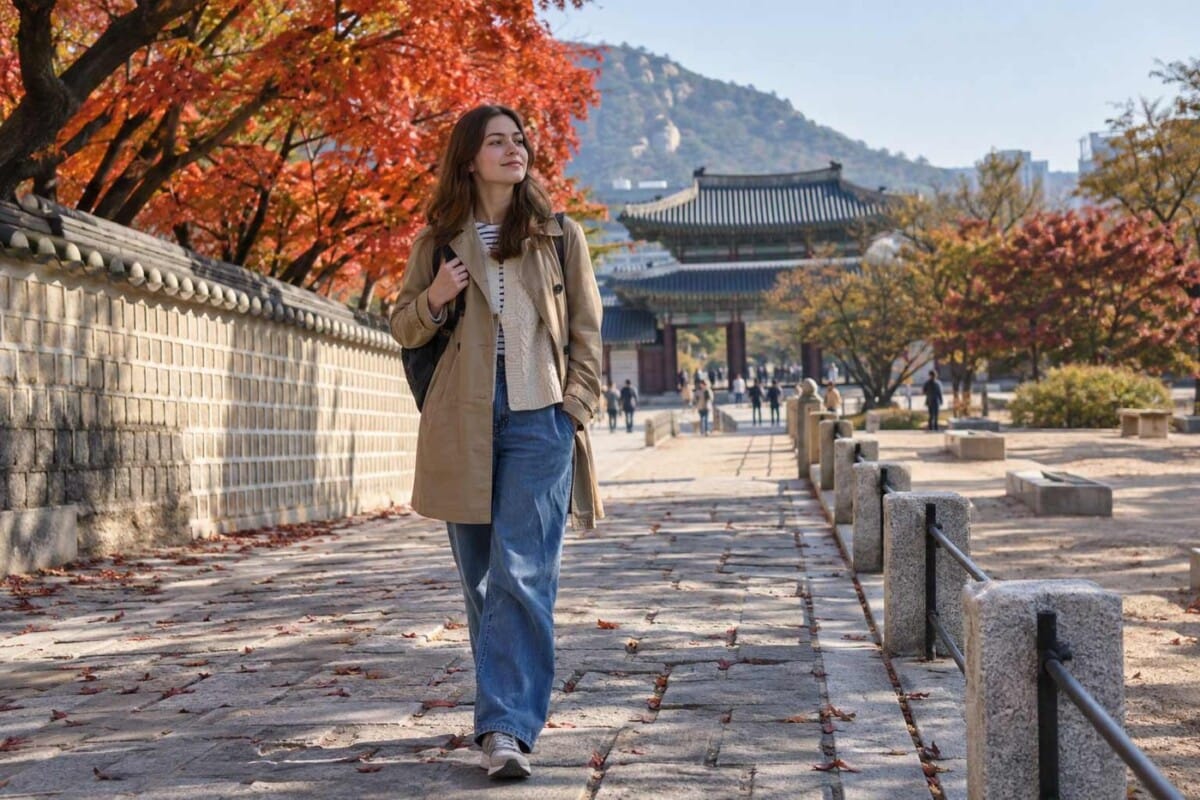
October is where a classic fall wardrobe starts to make sense, but the useful word is still removable. A T-shirt or long-sleeve base, a light knit or sweatshirt and one jacket will usually handle a wider range of days than a single heavy coat.
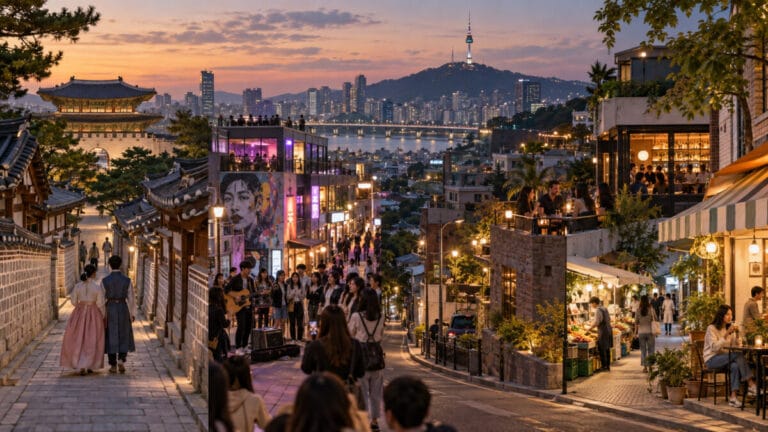
In Seoul, the monthly averages in the original fact-check sit around 20°C in the daytime and 11°C at the low end. The bigger problem is not the average itself. It is that morning, afternoon and evening can feel like different parts of the season.
October can also swing sharply between years. Korea’s weather agency reported that October 2025 was the warmest October in its national record since 1973 and unusually rainy. That is why the climate average should shape the suitcase, while the short-range forecast decides what you actually wear on Tuesday.
November: Stop Treating the Jacket as Optional
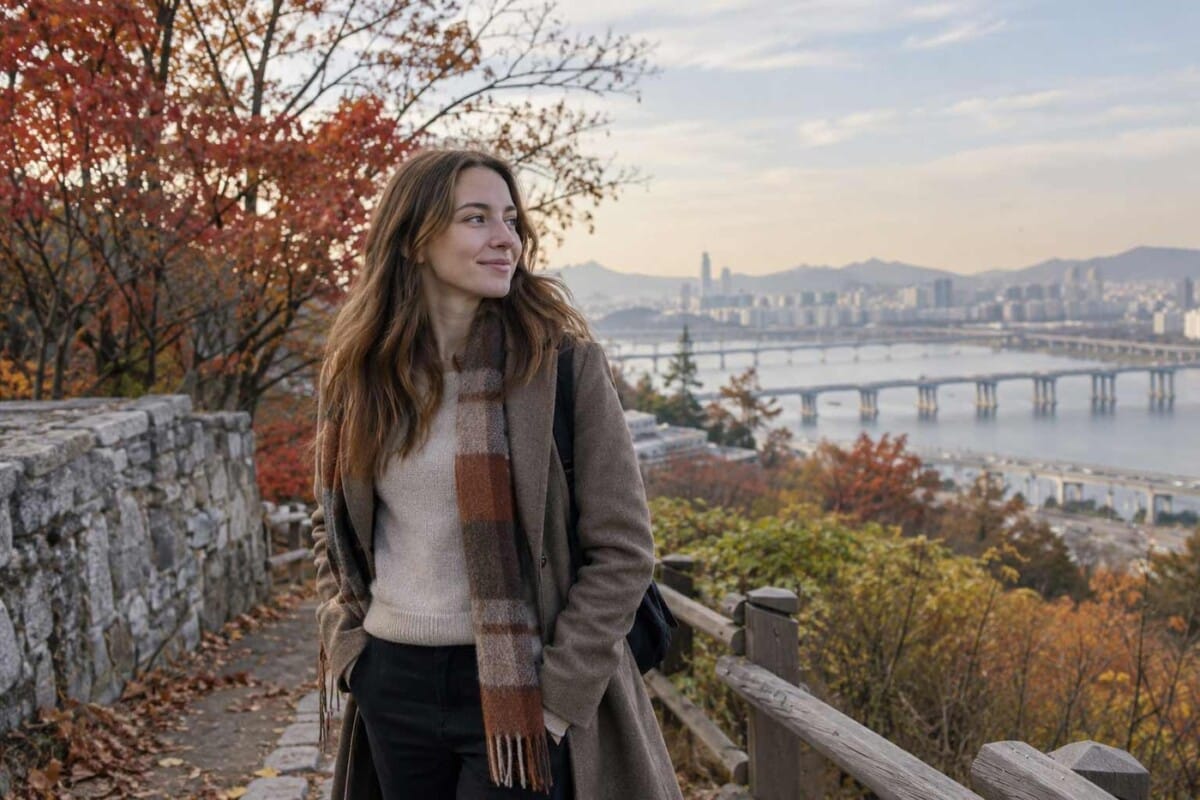
November is not just a cooler October. In Seoul, the average monthly low in the original guide is around 3.5°C (38°F). That is cold enough for a coat or insulated jacket to become a normal part of the plan, especially early or late in the day.
Pack long sleeves, one or two warm mid-layers, long pants and closed shoes. If you get cold easily, a scarf or another small warm layer takes less space than a second bulky coat.
Busan is milder. The original fact-check lists a November average high/low of about 16.6°C / 8.3°C (62°F / 47°F). That is enough of a difference that copying a Seoul packing list without checking your route can leave you carrying more outerwear than you need.
Your Route Can Matter More Than the Month
Two people traveling in the same week can need different clothes if one stays in Seoul and Busan while the other adds Jeju, hiking or a high-elevation national park.
For Jeju, check the actual temperature, wind and rain close to departure. Coastal conditions can feel different from an inland city even when the number on the weather app looks similar.
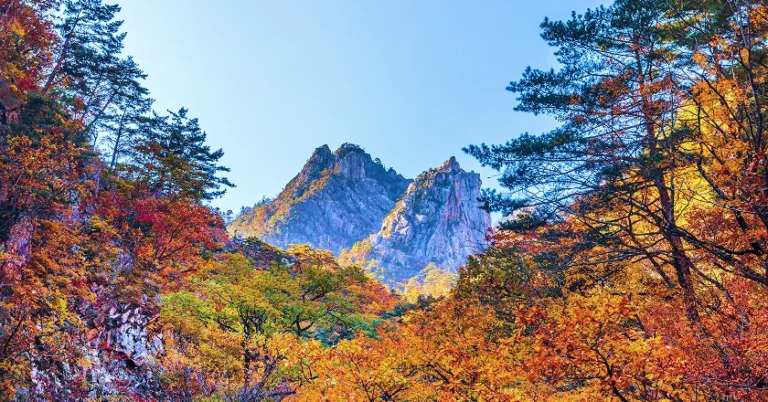
Mountain days should be treated as a separate packing problem. Korea Meteorological Administration climate normals show much lower temperatures at high-elevation locations such as Daegwallyeong than in Seoul. If a national park or mountain foliage trip is central to your itinerary, add a warmer layer than you would wear for shopping or museum days in the city.
If autumn color is the reason for the trip, use the separate Korea Fall Foliage 2026 guide for timing and destination planning.
Rain and Shoes: Pack for the Day You Will Actually Walk
Fall is generally clearer and drier than Korea’s summer season, but that does not make rain irrelevant. September and October can still bring wet days, and Korea Tourism Organization notes that typhoons can occur through October.
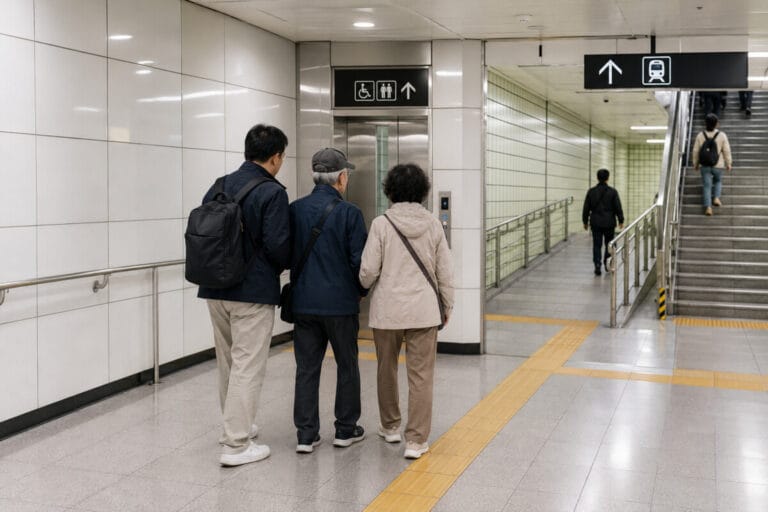
A compact umbrella or packable water-resistant shell is enough for most city trips. For shoes, comfort matters more than trying to match the season perfectly. Closed walking shoes are the most reliable choice from October onward because subway transfers, palace grounds and day trips can add far more walking than the itinerary makes obvious.
If you buy new shoes for the trip, do not make Seoul their first long-distance test.
A Simpler Packing Method Than Three Separate Lists
Instead of building a completely different wardrobe for every month, think in three layers and change the weight of each one.
- Base: the clothes you would be comfortable walking in during the warmest part of the day.
- Mid-layer: cardigan, sweatshirt, knit or fleece that can go in a bag when you do not need it.
- Outer layer: thin in September, light-to-medium in October, genuinely warm by November in Seoul.
This also makes a Seoul-to-Busan trip easier because you can remove one layer instead of packing two separate wardrobes.
You also do not need to prepare for every possible weather swing before leaving home. Korea has plenty of places to buy basic clothing if the forecast changes. For things you can leave out of the suitcase, see What NOT to Pack for Seoul.
Let the Forecast Overrule the Packing List
Climate normals tell you what kind of season you are entering. They do not tell you what your exact travel week will do.
Check the forecast again a few days before departure, then remove or add the final layer based on your actual cities and dates. If the forecast is much warmer, colder or wetter than the seasonal picture, believe the forecast.
For September, think late summer plus one layer. For October, think layers that come off easily. For November in Seoul, think proper outerwear.
Official Sources
- Korea Tourism Organization / VISITKOREA — Climate
- Korea Meteorological Administration — Climate Normals (1991–2020)
- Korea Meteorological Administration — Korea climate characteristics
- Korea Meteorological Administration — 2025 autumn climate characteristics
Travel information can change. Check official weather information shortly before your trip, especially for rain, cold snaps, coastal wind and mountain conditions.