
KOREA ESSENTIALS · MONEY & PAYMENTS
How Much Cash Should You Carry in Korea as a Tourist?
First Korea Trip · Updated October 1, 2026
Last fact-checked: October 1, 2026 · How we verify travel information
Think of Korean cash as a backup system, not your main travel wallet.
For a typical first-time visitor using cards for most spending, start with a modest cash buffer rather than converting the whole trip budget. The amount should cover the situations where cash still removes friction, then you can add more only if your itinerary actually needs it.
That buffer mainly protects three things: regular physical T-money top-ups, vendors or markets where cash is easier, and the moment an overseas card unexpectedly fails. If your trip is more cash-heavy, add more later. If you barely touch the cash, that means the backup did its job.
Start With a Buffer, Not a Full-Cash Budget
There is no official number for how much cash to bring to Korea because the answer changes with your trip style. A traveler who has prepaid accommodation, uses an international card for restaurants and shopping, and only needs cash for transportation-card top-ups can get by with far less cash than someone spending every evening at traditional markets.
For a typical first-time visitor using cards as the main payment method, the safer approach is to carry a modest starting cash buffer rather than a fixed amount copied from someone else’s trip. Your transport setup, markets, regional travel and backup-payment needs can change the amount quickly.
The useful question is not “What number does everyone carry?” but “What do I need cash to cover before I can withdraw or exchange more?” For most card-first itineraries, that means transport-card top-ups, a few cash-friendly purchases and one payment fallback.
What the Cash Buffer Is Actually For
Korea is highly card-friendly, but a completely cashless plan can still create unnecessary friction. Keep some won available for the situations that are most likely to catch first-time visitors out.
- Regular physical T-money top-ups: the standard tourist flow still requires Korean cash.
- Street food and traditional markets: card acceptance varies by vendor, so cash remains useful.
- Small independent businesses: most accept cards, but not every merchant or payment terminal will accept your particular foreign card.
- Payment failure backup: even a widely accepted Visa or Mastercard can fail because of issuer blocks, terminal compatibility or network problems.

If your main concern is transportation, read Can You Top Up T-money With a Credit Card in Korea? before deciding how much cash to keep.
Let Cards Handle Normal Spending; Keep Cash for Friction
Yes. Korea Tourism Organization says most businesses widely use and accept credit cards, including major hotels, department stores and general shops. Visa, Mastercard, American Express and other international cards can be used, although individual stores may still differ.
That is why converting your entire trip budget into cash before arrival is usually unnecessary for a normal city trip. A better setup is one main international card, a backup payment method, and a modest amount of Korean won.
Do not confuse “cards are widely accepted” with “every foreign card works everywhere.” A Korean merchant can accept card payments while your particular overseas card is still declined. Keep a fallback instead of relying on a single card.

Do Not Lock Too Much Cash Into T-money
You do not need to put a large amount onto T-money at once. Load enough for your first few rides, watch the remaining balance when you tap, and add more later. This keeps too much of your cash from sitting unused on the card near the end of the trip.
For the standard physical T-money card, plan around Korean-won cash for ordinary top-ups. If you want the full setup guide, see How to Use a T-money Card in Korea: A Tourist Guide.

Have a Refill Plan Before You Need One
You do not have to arrive with your entire cash requirement already exchanged. Korea Tourism Organization lists banks and authorized exchange services as normal places to exchange foreign currency, and Incheon International Airport lists multiple bank and public ATMs across its terminals.
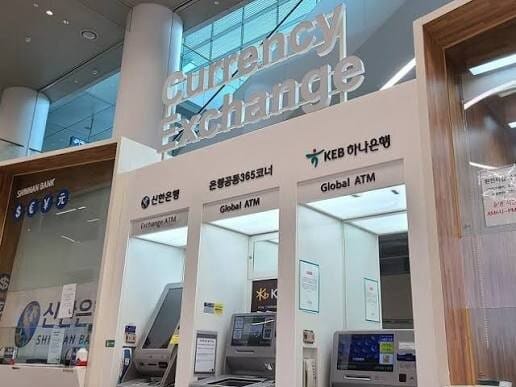
The important part is not assuming every ATM will work with every foreign card. Your card issuer may restrict overseas withdrawals, the ATM may support different networks, and fees or conversion options can vary. Check your own bank’s overseas-withdrawal settings before departure and read the ATM screen before confirming a transaction.
If you are landing at Incheon and immediately heading into Seoul, it is useful to have enough won available for your first transportation and T-money needs. For airport transport options, see Incheon Airport to Seoul: AREX, Bus or Taxi?.
The Mistakes That Make a Small Cash Problem Feel Bigger
- Exchanging your entire trip budget before you know what you need. Cards cover most mainstream spending, so a large cash balance can become something you have to spend or convert again.
- Arriving with zero won. A basic T-money setup is one of the first common reasons tourists need cash.
- Relying on one foreign card. Merchant acceptance and your issuer’s approval are separate issues.
- Loading too much onto T-money early. Add value gradually instead of treating it like your entire travel wallet.
- Carrying all your cash in one place. Keep only what you expect to use and store your backup separately.
You also do not need to budget extra cash for tipping in the same way you might in some other countries. See Tipping in Korea: Do You Tip or Bargain as a Tourist?.
Official Sources
- Korea Tourism Organization — Korean Currency & Exchange Info
- Korea Tourism Organization — Tourist-Friendly Korea
- Korea Tourism Organization — International Visitors’ Transportation & Payment Guide
- Incheon International Airport — Banking & ATM Facilities
Payment support, ATM compatibility and exchange conditions can change. Check your card issuer and the relevant official source before relying on a specific payment method.